
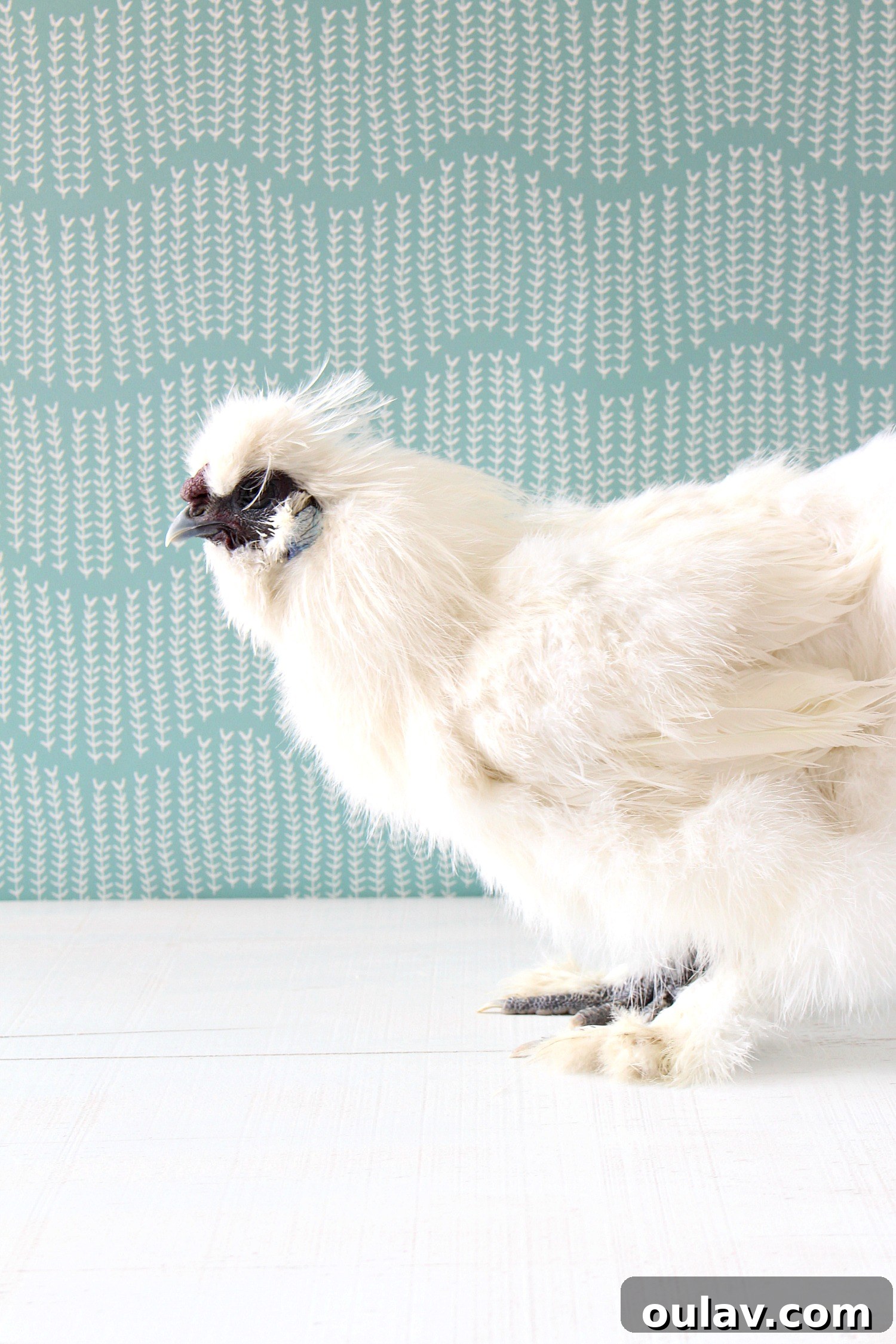
As a new keeper of backyard chickens, the journey has been full of delightful surprises and unexpected tasks. One such recent revelation, which I never imagined would be on my poultry-keeping to-do list, was learning the art of bathing a chicken – and understanding precisely why it’s a necessary skill. My initial motivation for this somewhat unusual chore arose from my beloved Silkie rooster, Pearl, whose gloriously fluffy feathers had become seriously matted with caked-on droppings, an unfortunate side effect of his nighttime roosting habits. The sight was, frankly, a bit much to bear, and it prompted me to take action.
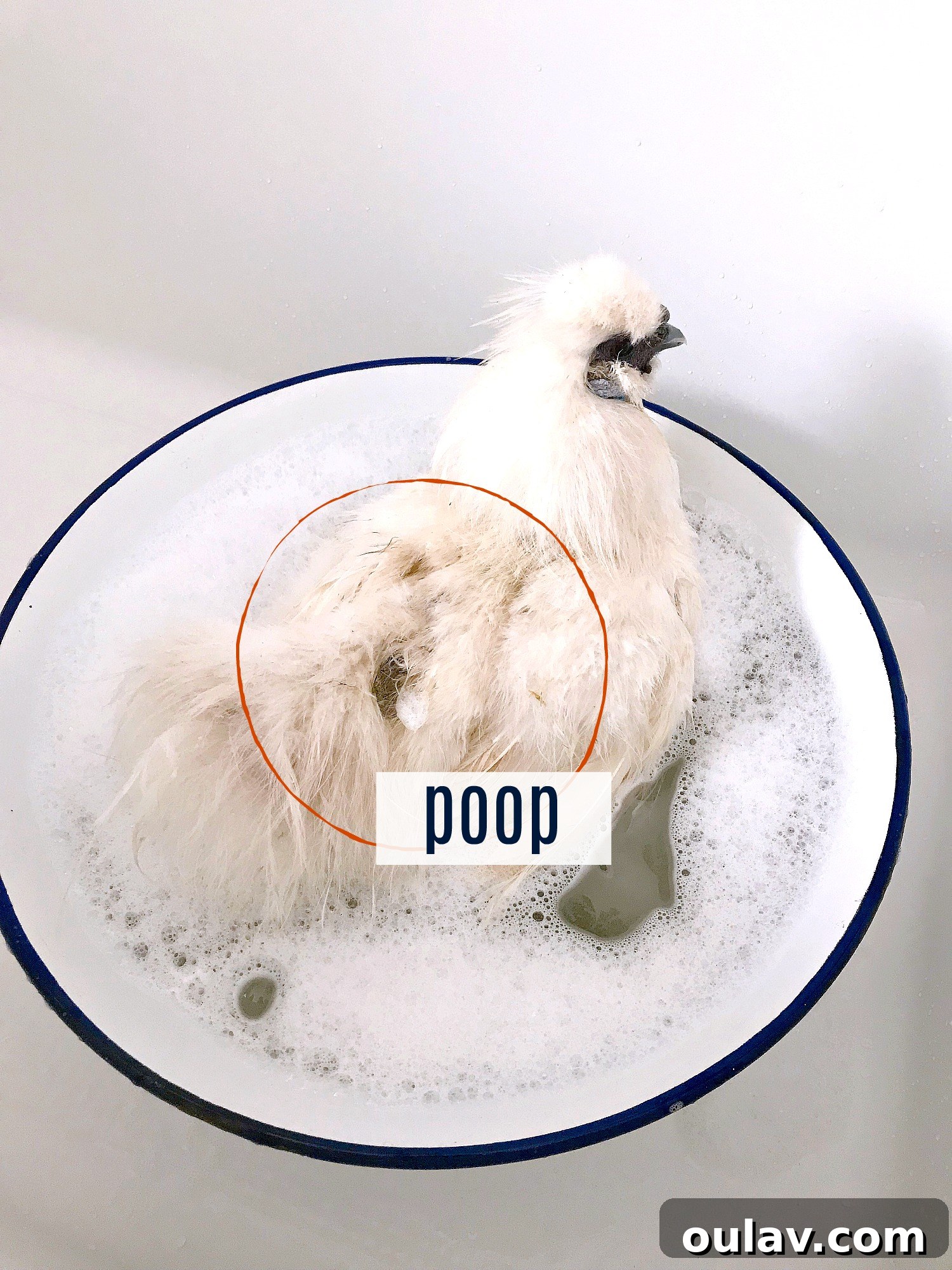
Indeed, cuddling a chicken with a mucky bottom is far from enjoyable. But beyond mere aesthetics and comfort, there’s a crucial health aspect to consider. While chickens are naturally inclined to maintain their cleanliness through dust bathing – wriggling and flapping in dry soil to remove dirt and parasites – sometimes this isn’t enough. Certain breeds, particularly those with dense feathering around their vent area, like Silkies or Wyandottes, are more prone to accumulating sticky fecal matter. My Wyandotte, Dolly, for instance, also developed a persistent wad of poop beneath her vent. Even with an indoor dust bath provided during colder months, they much prefer creating their own dust pits outdoors.
My decision to bathe my two “poop monsters” initially stemmed from my aversion to their soiled appearance. However, later that same day, I uncovered a far more alarming reason to prioritize chicken hygiene: the threat of Flystrike. This gruesome condition occurs when flies are attracted to damp, soiled areas on a chicken, laying eggs that quickly hatch into maggots. These maggots then begin to burrow into the chicken’s flesh, causing immense pain, infection, and, if left untreated, can be fatal. The very thought made me gag, but the reality is that preventing Flystrike is a critical responsibility for every chicken keeper.
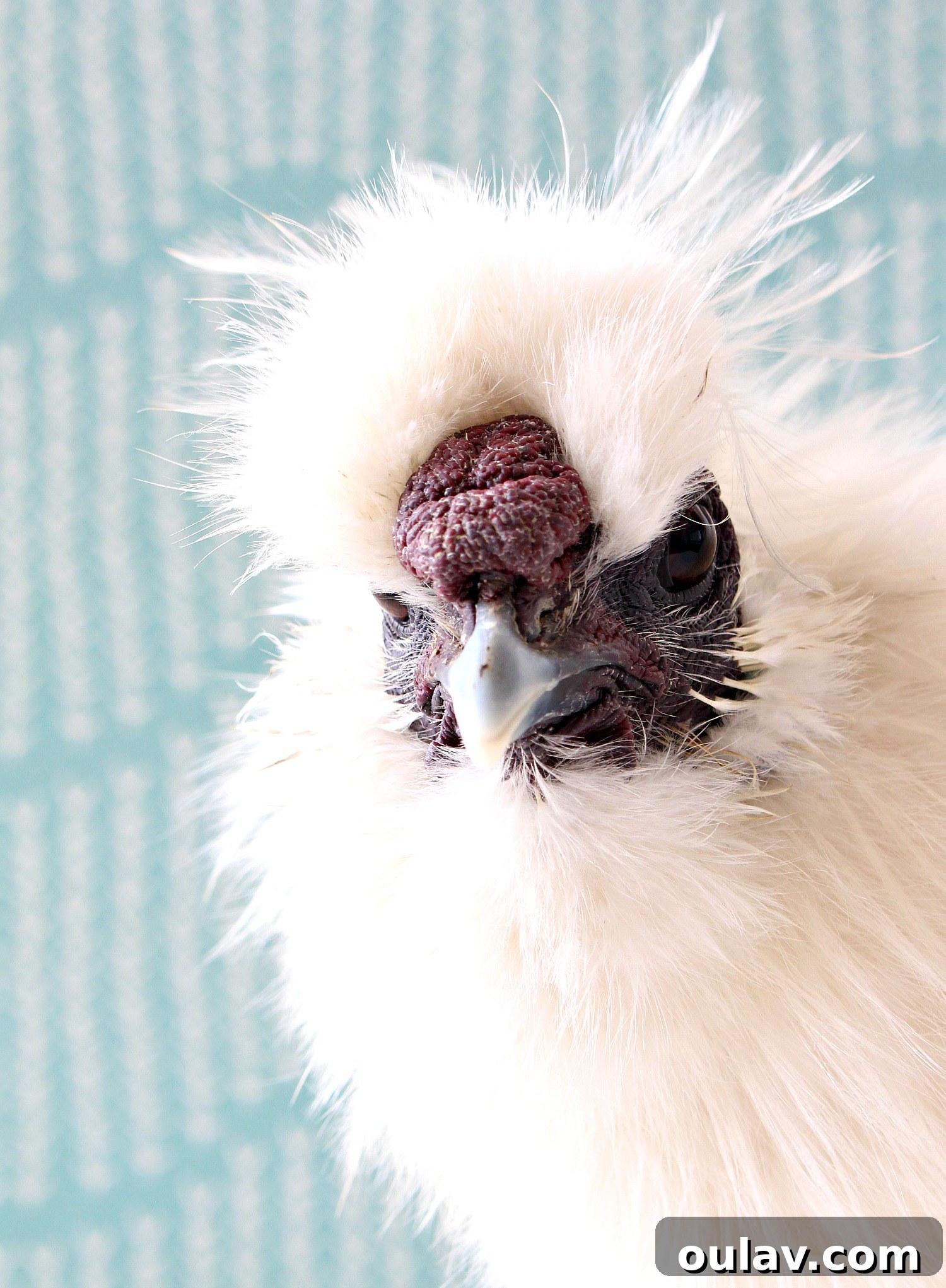
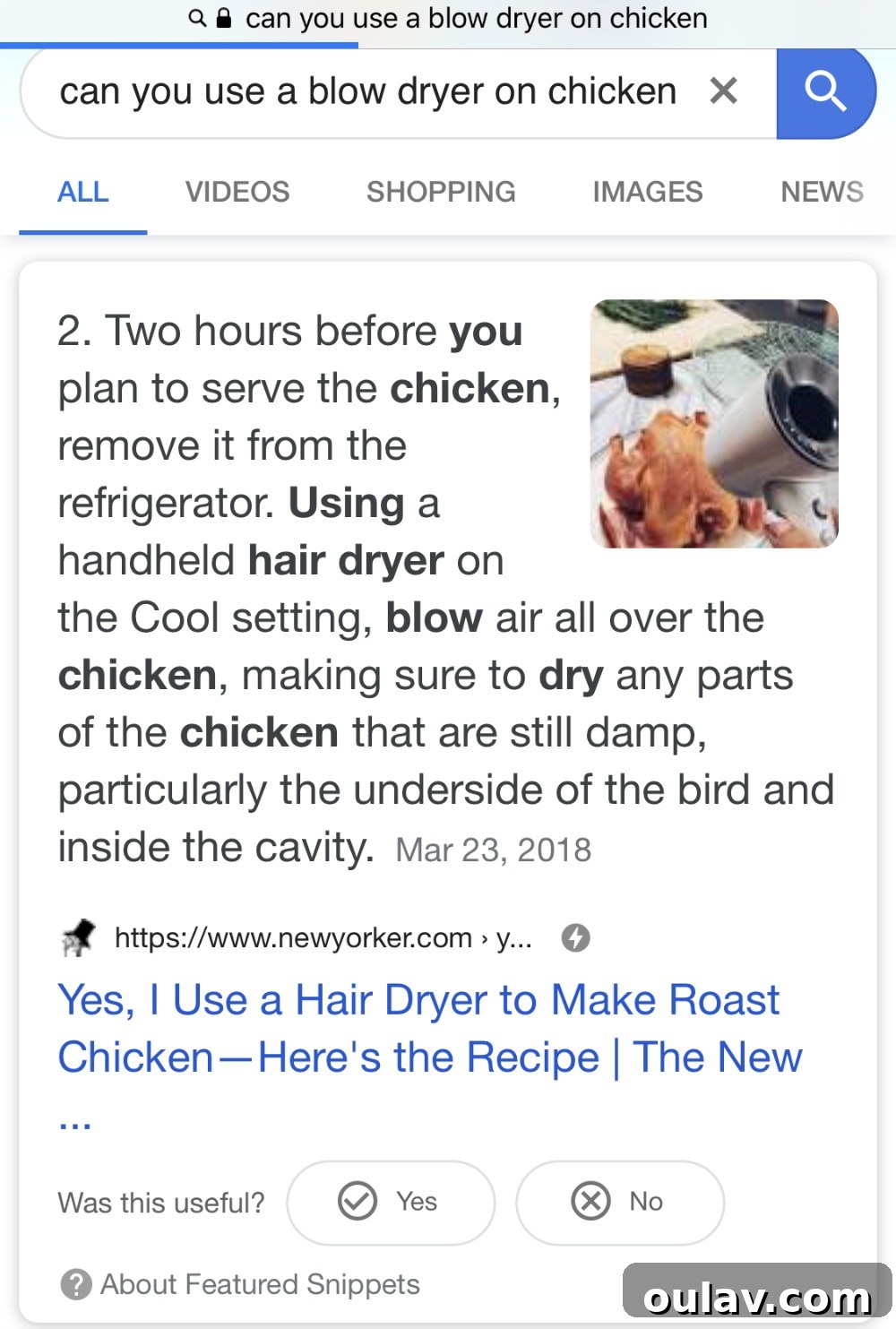
Pearl, in his newly fluffy glory, seems suitably horrified by the prospect of Flystrike, and so am I. This experience solidified my commitment to vigilant bum-cleaning this spring. I had initially shared Pearl’s bathing adventure on my Instagram stories, saving it under a highlight titled “SILKIE BATH” simply for its humorous value. But then I realized the greater need: to create a comprehensive guide for fellow new chicken keepers. There’s a noticeable lack of practical, step-by-step advice online, as evidenced by my own humorous search for “can I blow dry chicken” yielding recipes instead of poultry care tips. This post aims to equip you with the knowledge to comfortably and confidently bathe your chickens, prevent conditions like Flystrike, and maintain the overall health and happiness of your flock.
A clean chicken is not only healthier but also more pleasant to interact with. Regular inspection and timely intervention can save your birds from discomfort and severe health issues. Whether you’re dealing with a particularly messy eater, a chicken prone to pasty butt, or simply want to prepare your show birds, knowing how to properly bathe your feathered friends is an invaluable skill.
Essential Supplies for Bathing Your Chicken:
Before you begin the bathing process, gather all your supplies within easy reach. This will make the experience smoother for both you and your chicken, minimizing stress and ensuring you don’t have to leave a wet bird unattended.
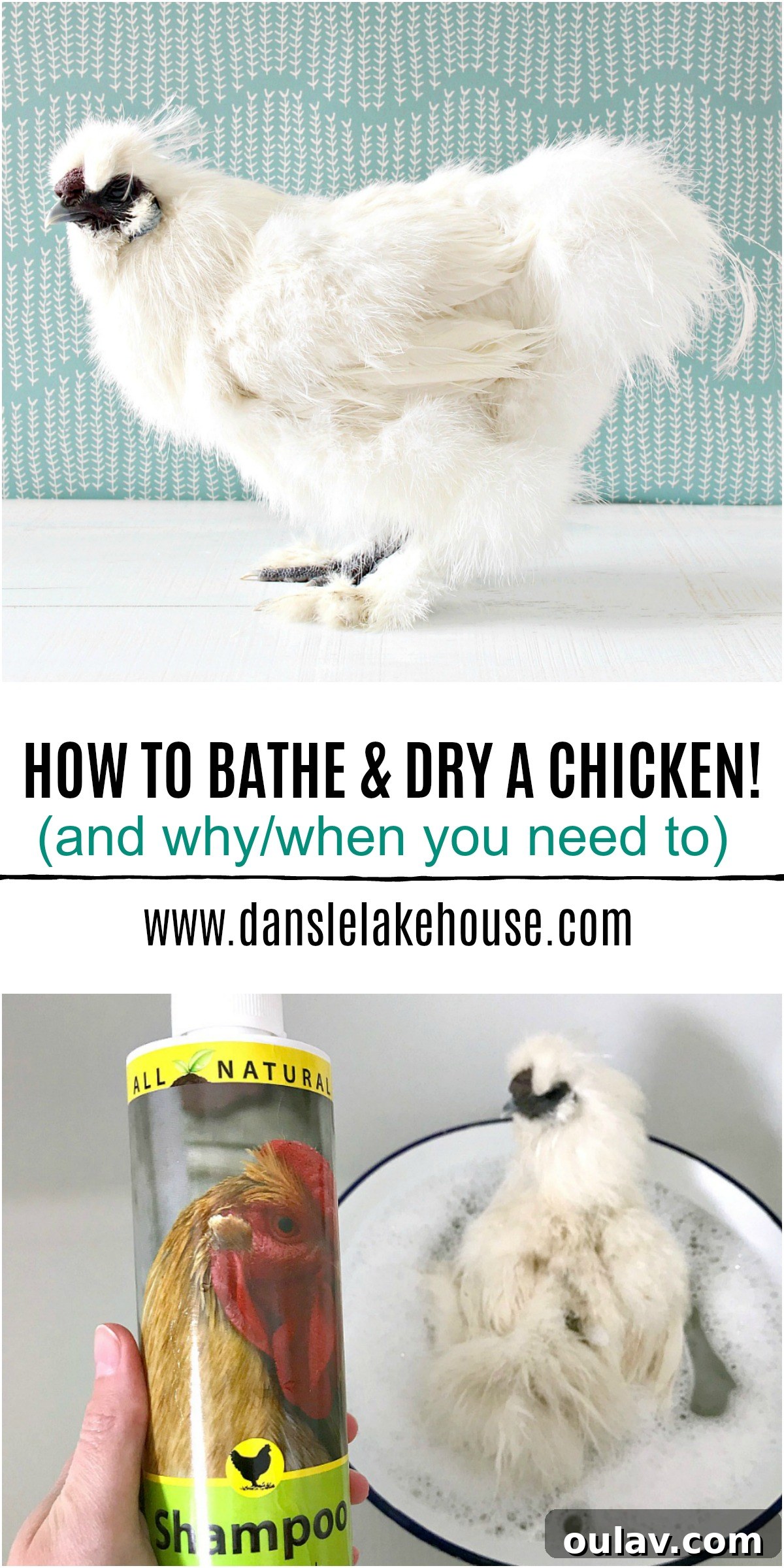
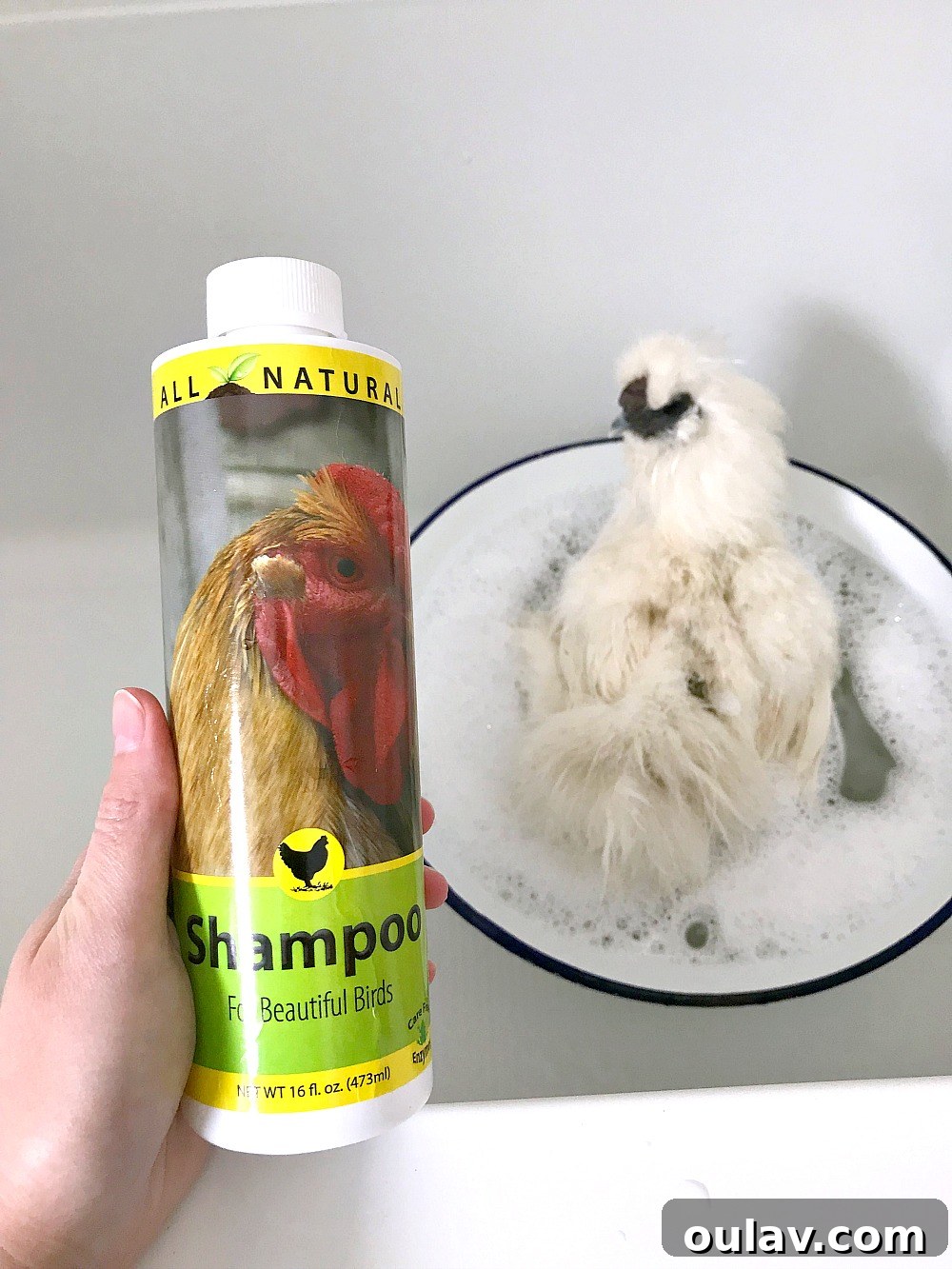
- Poultry Shampoo: Use a shampoo specifically formulated for poultry or mild, unscented pet shampoo. Avoid harsh human shampoos, as they can strip natural oils and irritate a chicken’s delicate skin.
- Small Wash Basin/Bucket: A sturdy plastic basin or bucket is ideal for containing the water and the chicken during the bath. Ensure it’s large enough for the chicken to sit comfortably but not so big that they feel lost.
- Old Towels: You’ll need several towels – one to place at the bottom of the basin for grip, and others for gentle drying after the bath. Expect them to get wet and potentially soiled.
- Pet Crate: A small dog or cat crate provides a safe, contained space for your chicken to air dry or relax while you prepare for the next step.
- Hair Dryer: Essential for thoroughly drying your chicken, especially in cooler climates, to prevent chilling. A quiet model with multiple heat settings is preferable.
- Optional but Recommended: Rubber gloves (for handling poop), a small cup or pitcher for rinsing, and a trusted helper to hold the chicken if possible.
Step-by-Step Guide: How to Bathe a Chicken
The bathing process, while seemingly daunting, can be managed calmly with proper preparation and technique. Remember, your goal is to clean your chicken gently and efficiently, minimizing their stress and your mess.
- Choose Your Location Wisely: I bathed my chickens in a small wash basin placed inside my bathtub. I cannot stress this enough: *do not* attempt this in your kitchen or any carpeted area. Chickens, even calm ones, can suddenly flap their wings, distributing water and, more alarmingly, poop, across a wide radius. The tub provides the safest, easiest-to-clean environment.
- Prepare the Bath: Fill your wash basin with warm water – think baby bath temperature, comfortably warm to your elbow, not hot or cold. Add a small amount of poultry shampoo according to the product instructions. The water should be deep enough to cover the chicken’s lower body and soiled areas, but not so deep that they cannot stand or feel secure.
- Introduce Your Chicken: Gently lower your chicken into the warm water, supporting their body. Talk to them in a calm, soothing voice. Allow them to settle. For particularly caked-on messes, a good soak is crucial. Pearl, for example, benefited from simply sitting in the warm, soapy water for a few minutes, which helped to soften and loosen the hardened droppings.
- Gentle Cleaning: Once the poop has softened, you can gently work it off. For stubborn bits, you might need to carefully pick them away by hand (wearing gloves is recommended here). Avoid harsh scrubbing, as this can damage their skin or feathers. The goal is to let the water do most of the work, dissolving the grime. You might be surprised at how easily solidified poop melts away in warm water.
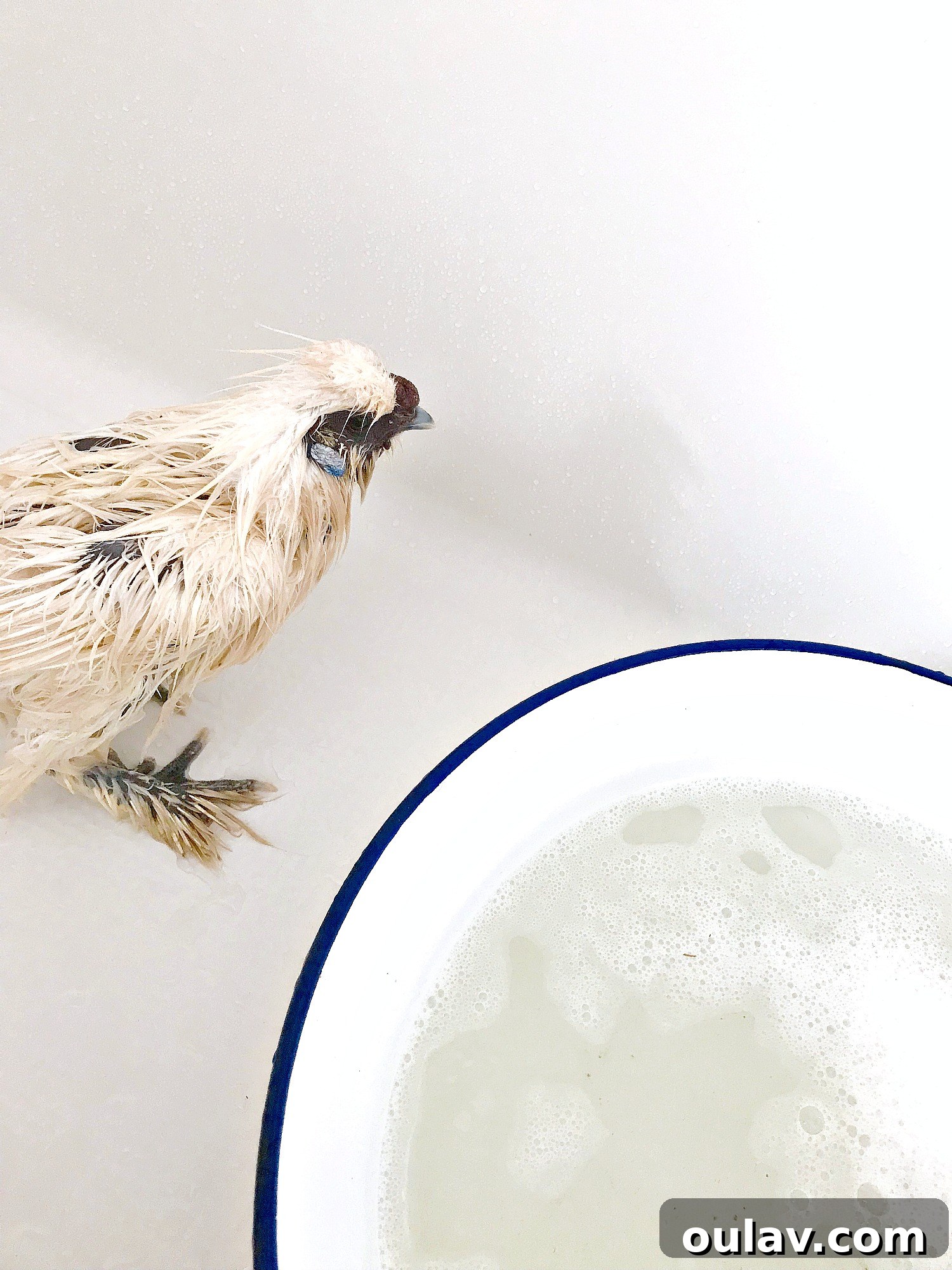
- First Rinse and Re-bath (if needed): When your chicken shows signs of wanting out, or after the initial cleaning, gently lift them. You can use a removable shower head on a low, gentle setting to rinse the soapy water from their feathers. Be prepared for a potential “freak out” moment; chickens often flap vigorously when transitioning out of the water. This is when I experienced the full impact of poop-flapping, reinforcing my gratitude for choosing the bathtub! After rinsing, if the chicken is still significantly dirty, you might need to pour out the old water and draw a fresh, clean bath for a second, gentler soak.
- Final Rinse: Ensure all shampoo residue is thoroughly rinsed from your chicken’s feathers and skin. Leftover shampoo can cause irritation or dry skin.
Drying Your Chicken After a Bath: A Crucial Step
Drying is just as important as bathing, especially for preventing chilling and ensuring your chicken’s comfort. Chickens, particularly those with dense feathering like Silkies, can take a long time to dry naturally.
- Towel Dry Gently: Immediately after their bath, wrap your chicken in a clean, soft towel. Gently blot and squeeze excess water from their feathers. Avoid harsh rubbing, which can damage feathers. Poor Pearl looked quite bedraggled when wet, but a good towel dry helps immensely.
- Initial Air Drying (in a Crate): Place your towel-dried chicken in a pet crate lined with fresh, dry towels. Position the crate in a warm, quiet, draft-free room. Closing doors and blinds can create a calming environment. In very warm and dry climates, this might suffice, but for most, especially in cooler weather, additional drying is necessary to prevent hypothermia.
- Blow Drying for Thoroughness and Comfort: This is where the hair dryer comes in. Set your hair dryer to a low heat and gentle airflow setting. Hold it at a safe distance (at least 6-8 inches) from your chicken, constantly moving it to avoid concentrating heat in one spot. Always monitor the temperature by keeping your free hand under the airflow, fluffing the feathers gently. Blow the air *with* the natural direction of the feathers, not against the grain, to help them dry smoothly and prevent discomfort.
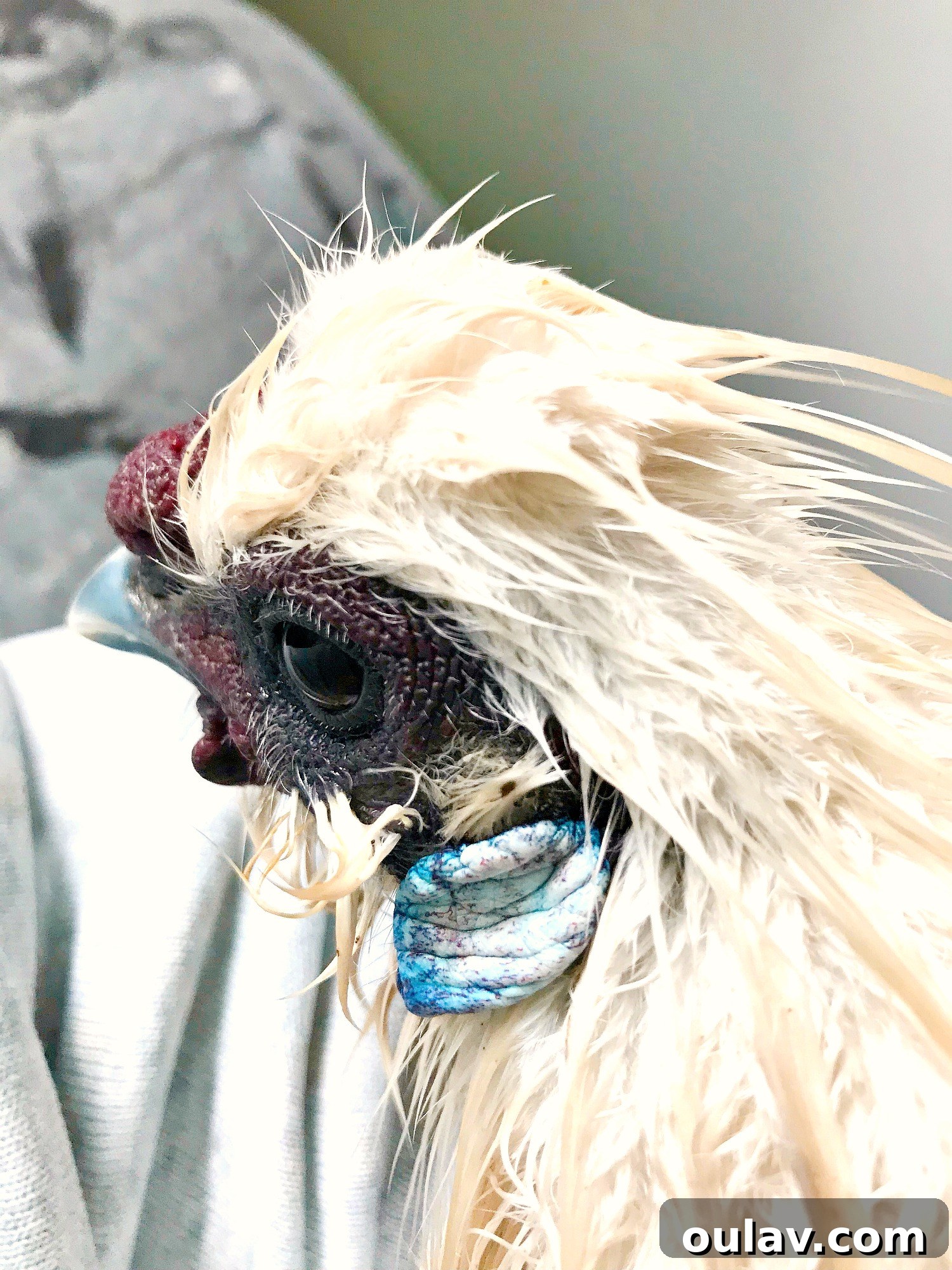
I was surprised to discover that my chickens, Pearl and Dolly, absolutely loved the blow dryer! Pearl snuggled into my arms, completely blissed out, and Dolly tolerated the bath but equally enjoyed the warm airflow. It took a couple of hours to dry Pearl fully, but the result was a supremely fluffy and beautiful rooster. The video of him enjoying his blow dry is saved on my Instagram page under the “SILKIE BATH” highlight – it’s guaranteed to make you smile!
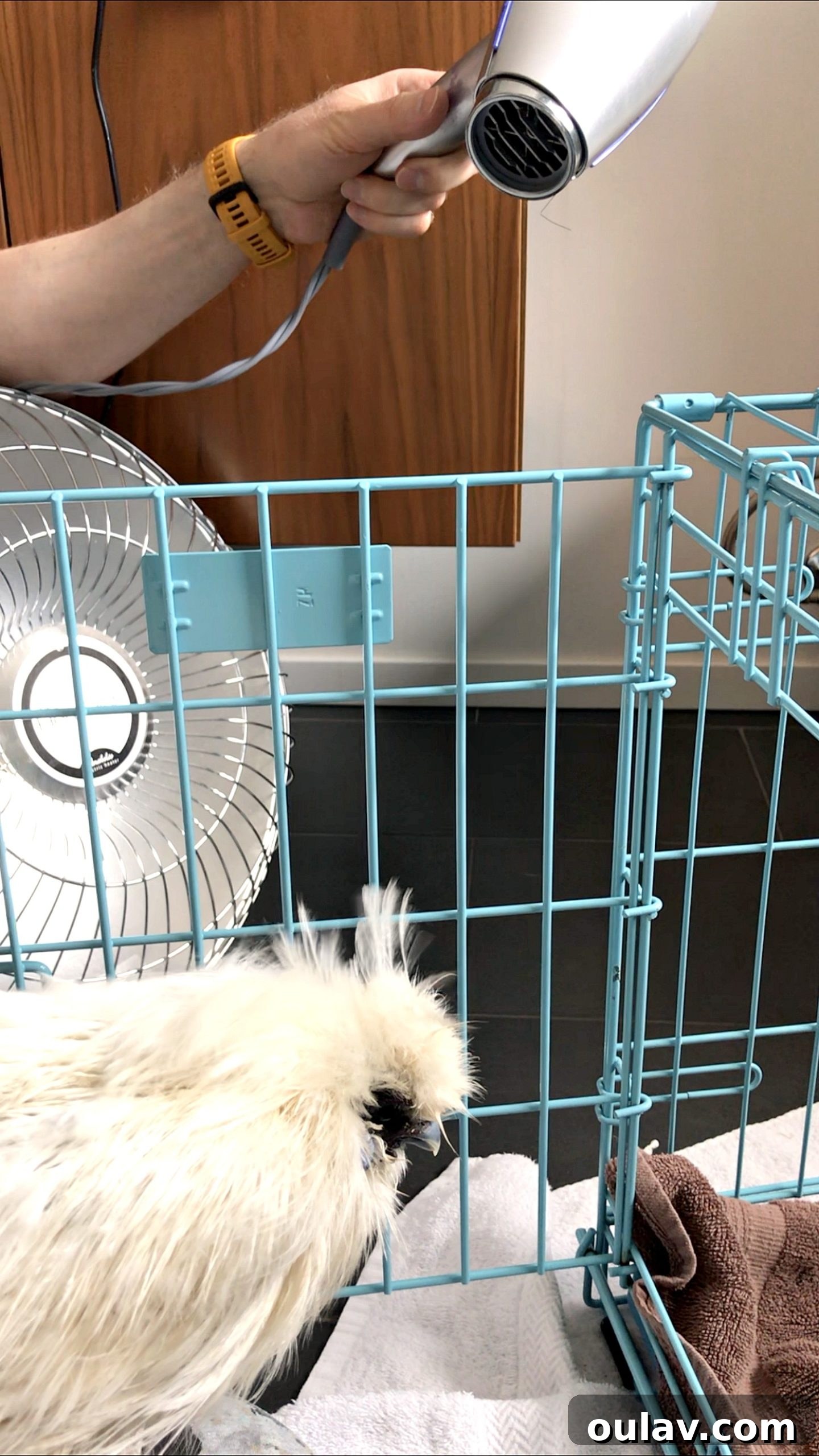
Ensure your chicken is completely dry before returning them to their coop, especially if it’s cold outdoors. Damp feathers lose their insulating properties, making your chicken vulnerable to chilling.
Meet the Marvelous Silkie Chicken: A Post-Bath Showcase
While the initial photos were cell phone captures documenting the process, now that Pearl is sparkling clean and exquisitely fluffy, it’s the perfect opportunity to appreciate this unique breed. Let’s shift our focus from poop and maggots to the fascinating world of Silkie chickens!
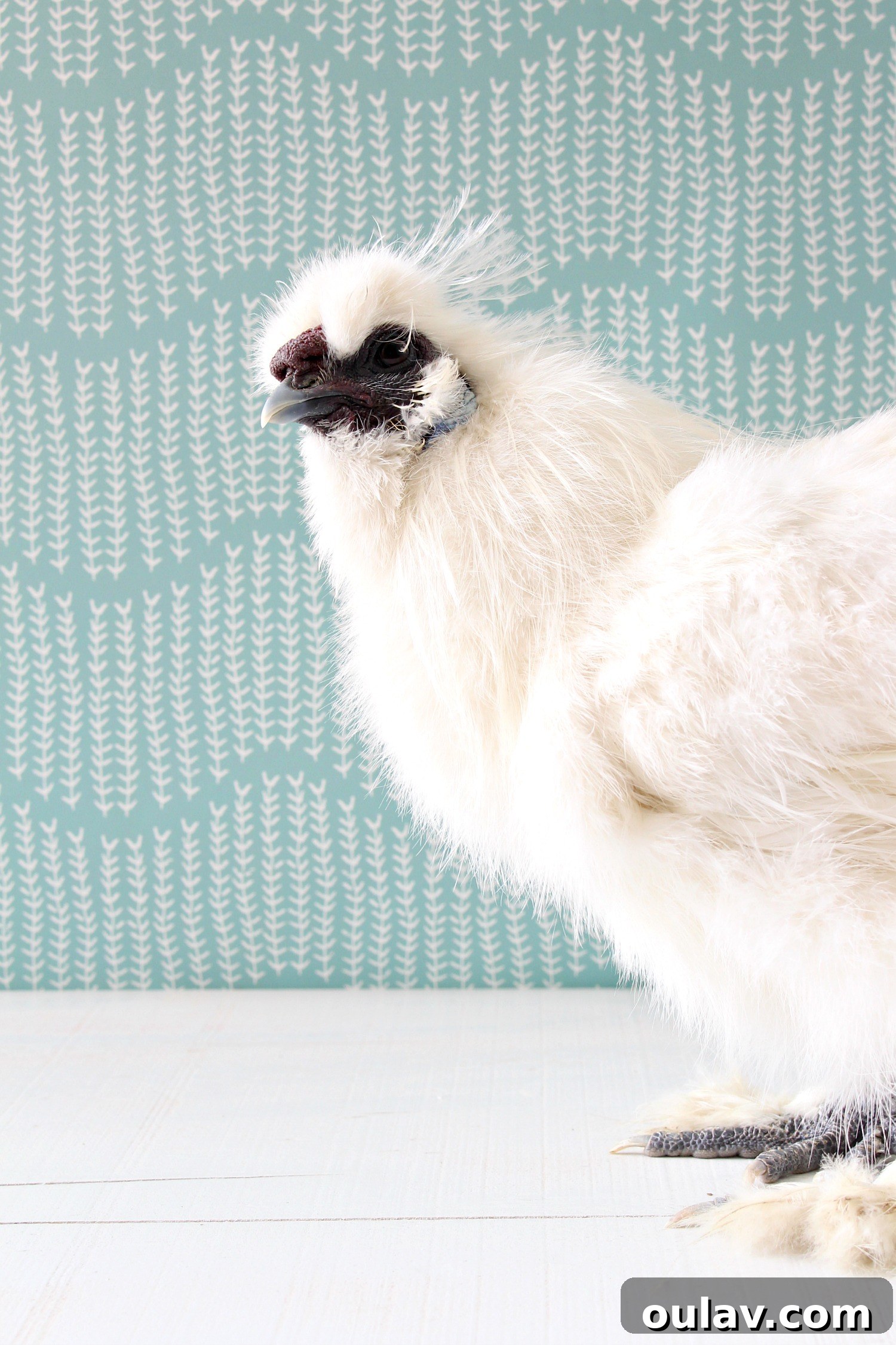
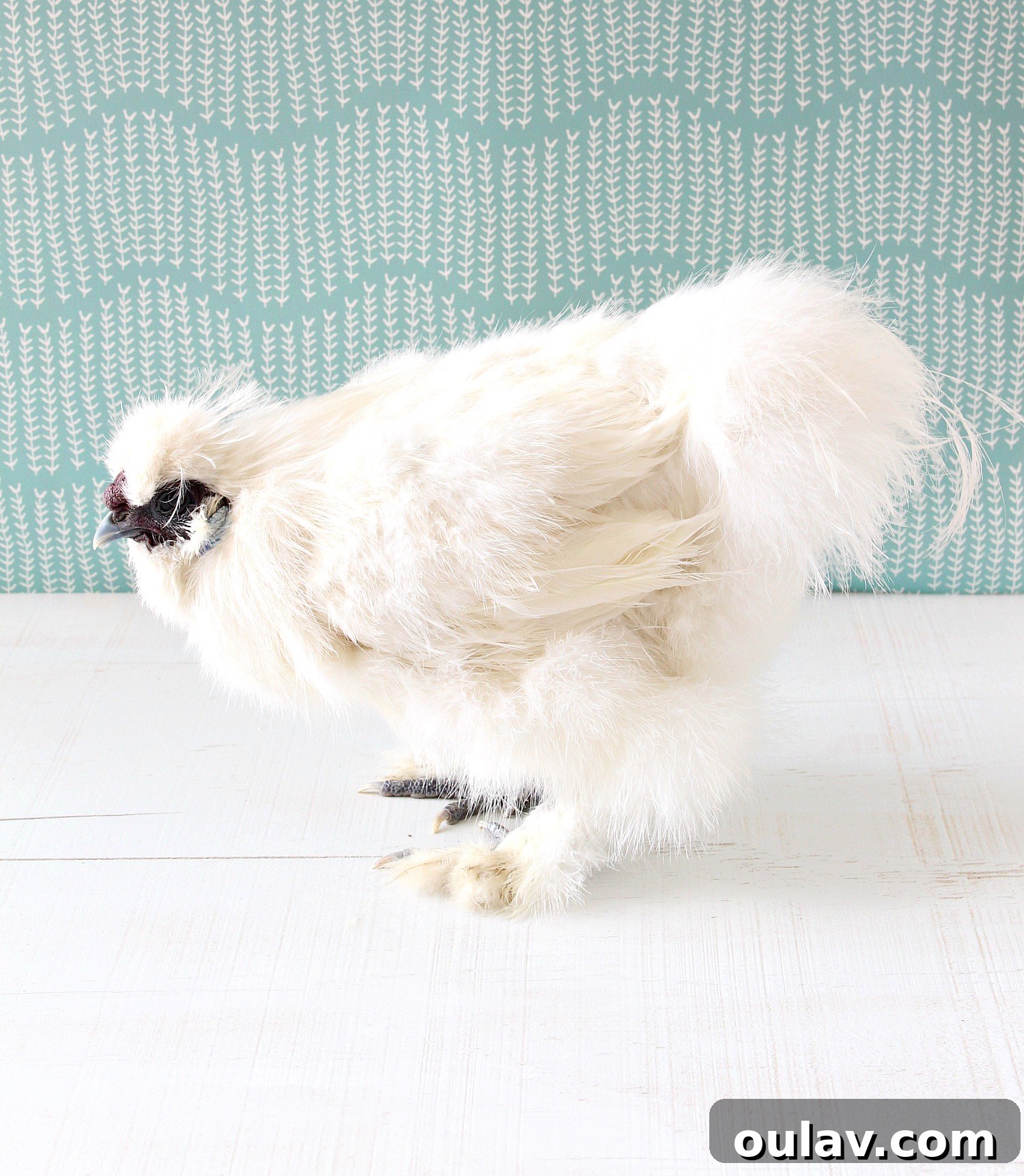
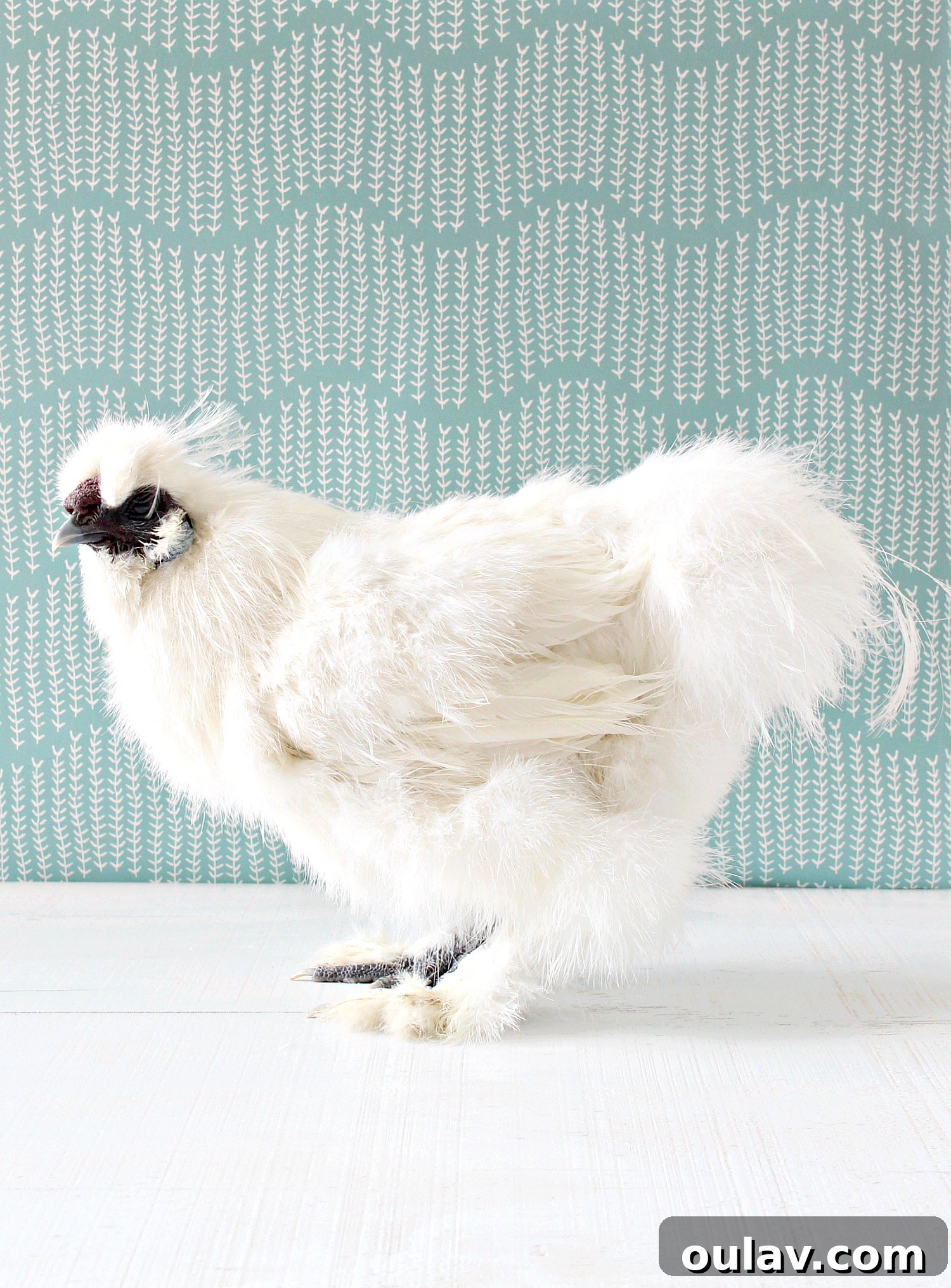
If ever a dictionary needed a photograph to accompany the phrase “fluffy butt,” Pearl’s post-bath posterior would be the quintessential illustration!
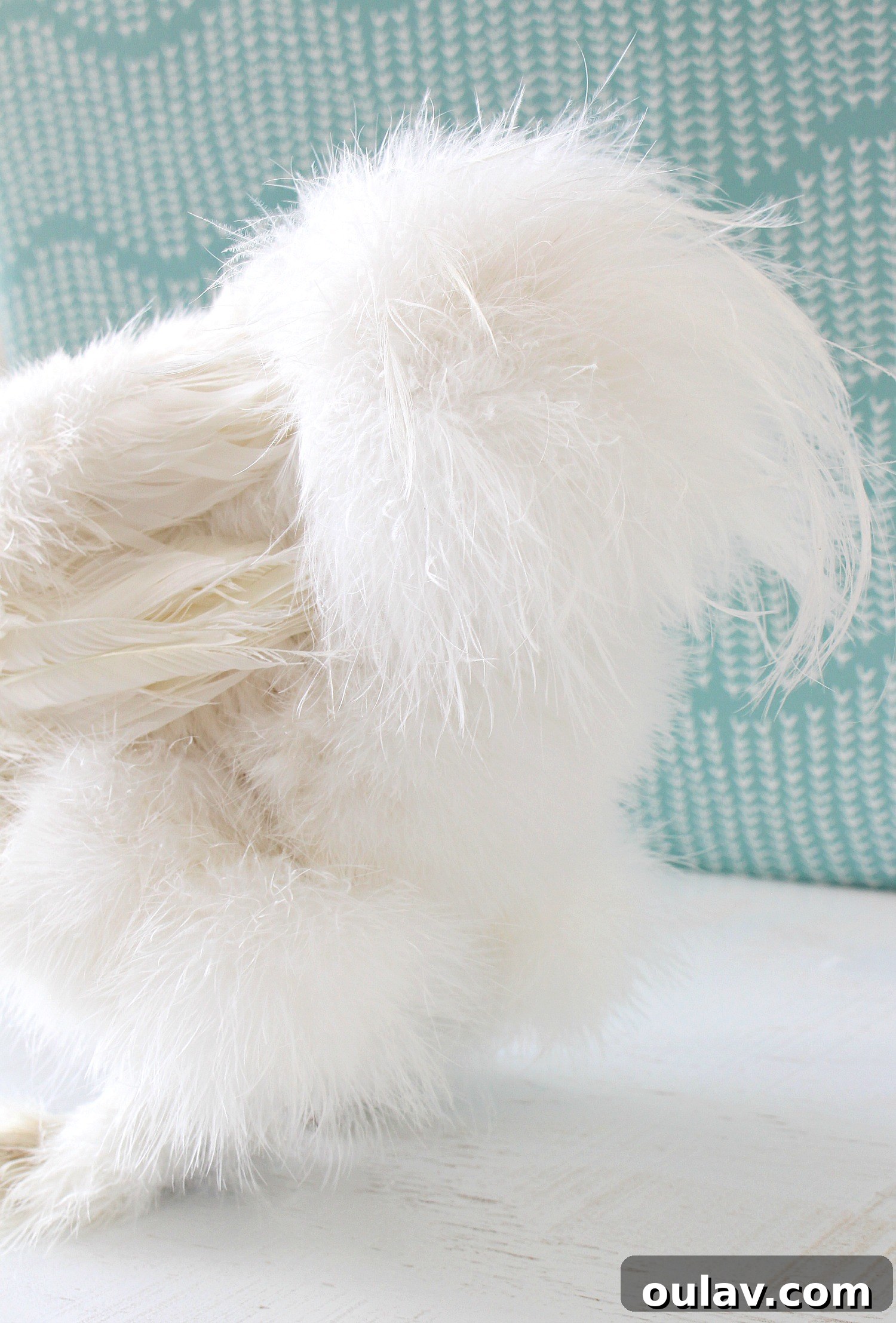
Beyond their endearing fluffiness, Silkies are a truly extraordinary chicken breed, originating from Asia. Their distinguishing characteristics include all-black skin and bones (a condition called fibromelanosis), striking blue earlobes, and five toes on each foot (most chickens have four). Their plumage is distinctively soft and down-like, lacking the typical barbicels that give other chicken feathers their stiff structure. This unique feather type is what gives them their “furry” appearance, a trait so unusual that Marco Polo himself recorded descriptions of these “furry chickens” in his journals around 1290-1300.
Silkie combs are also quite unique. Unlike the typical single or rose comb, they feature a small, walnut-shaped comb, often a rich mulberry or dark color, as seen on Pearl. The extra toe is a fascinating genetic quirk that makes Silkie chicks easily identifiable, even in a brood of various breeds, as you might have seen in my chick photo shoots.
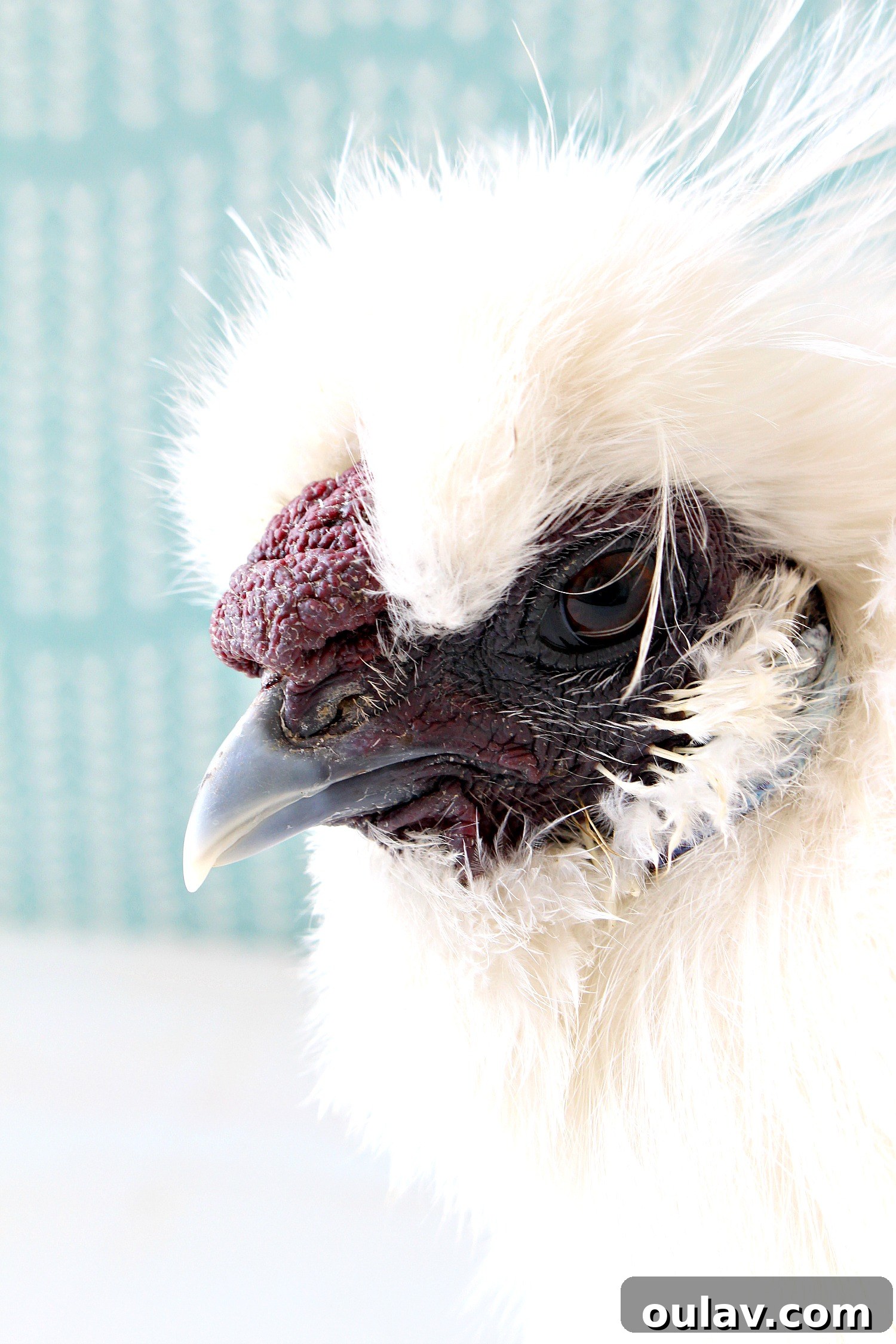
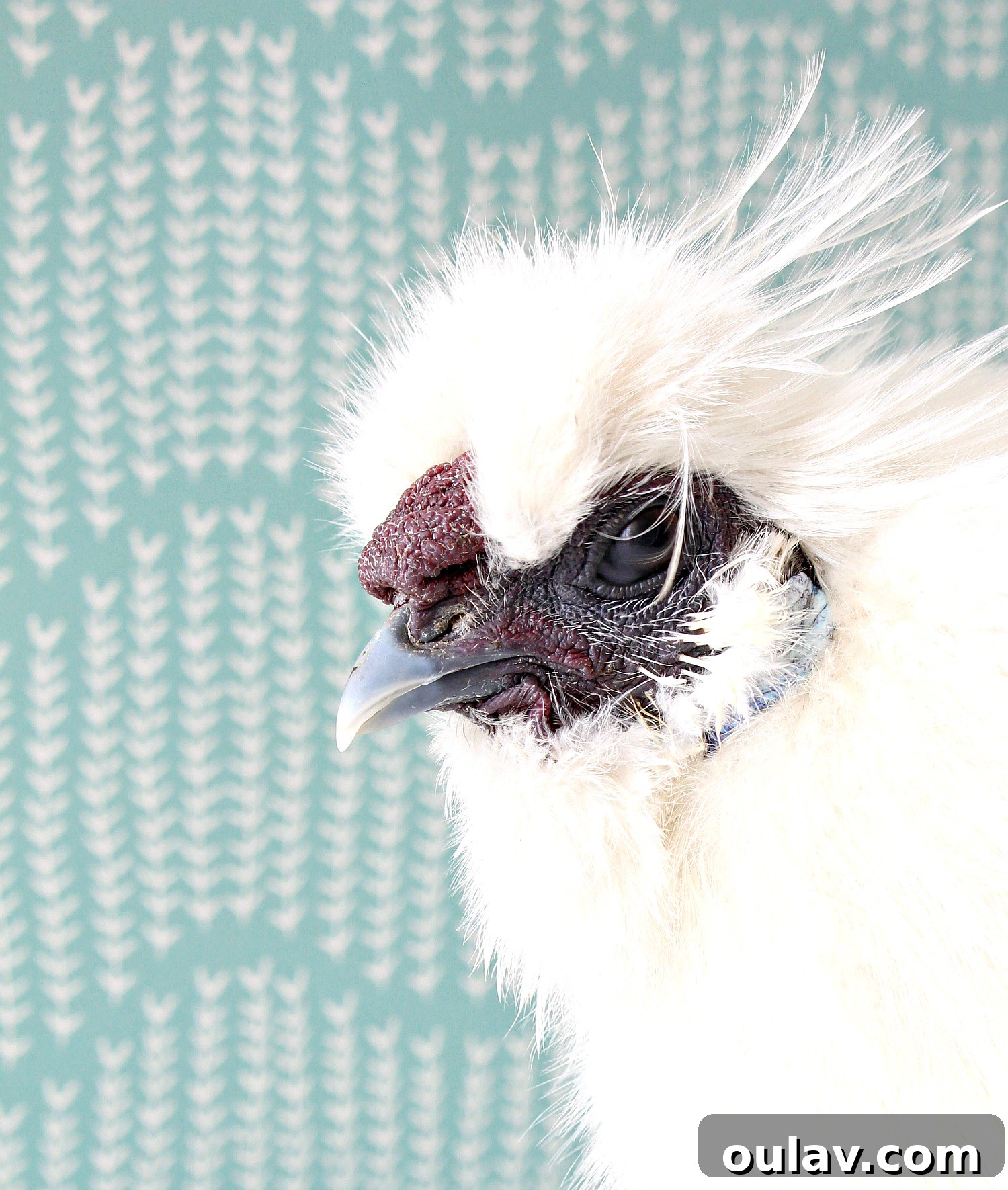
My original two Silkies, Pearl and Coal, matured slower than my other chicks. It was Pearl’s developing streamers – those long, wispy tail feathers – that confirmed his rooster status, leading to a rather ironic name for a male bird (we often joke the ‘P’ is silent, but he’ll always be Pearl to me!). Although I had hoped both would be hens, I ended up with one of each. Pearl embodies the typical calm and docile Silkie temperament, though he’s a bit more skittish than Coal. He’s never aggressive, making him a pleasant addition to the flock.
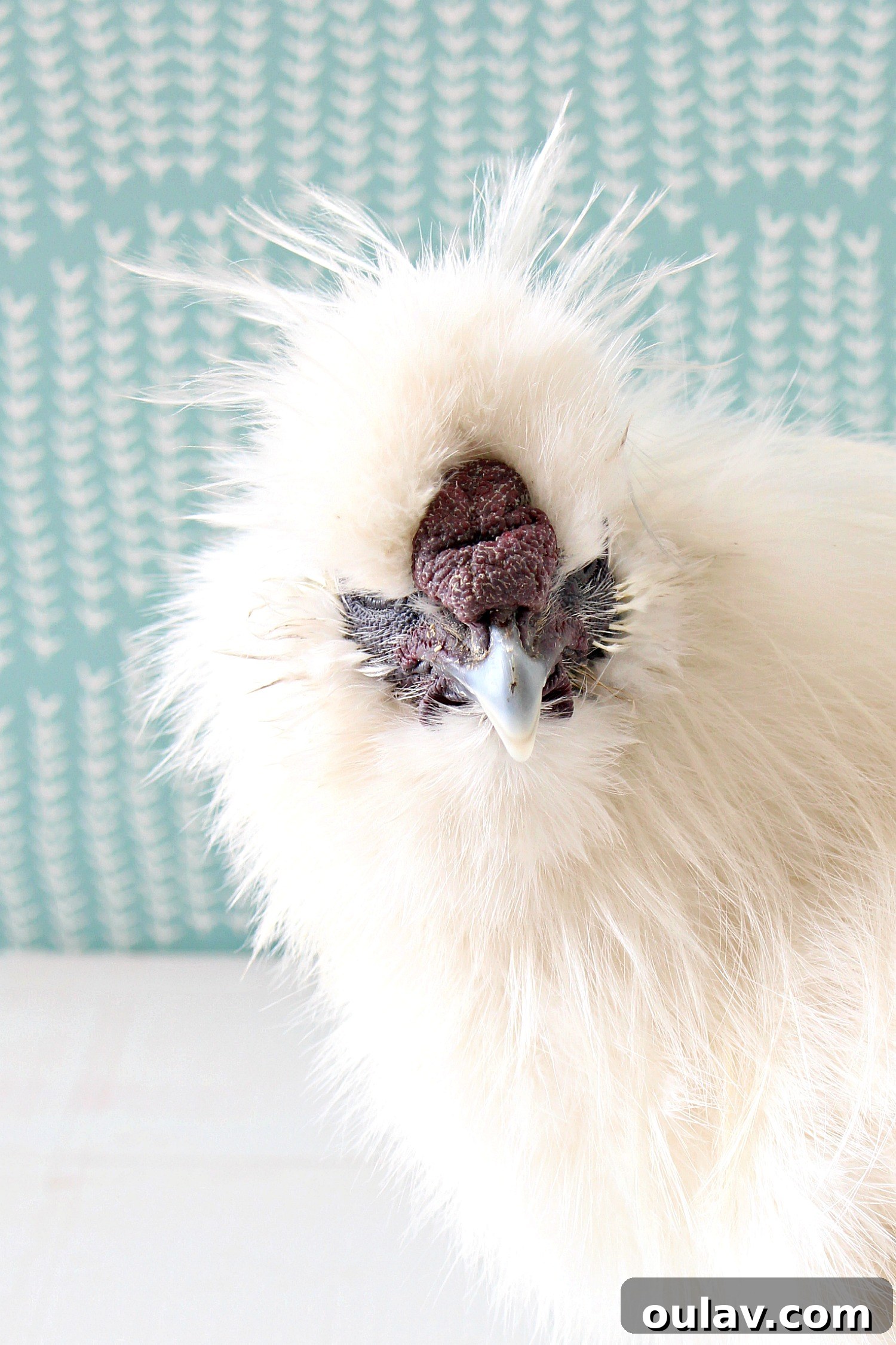
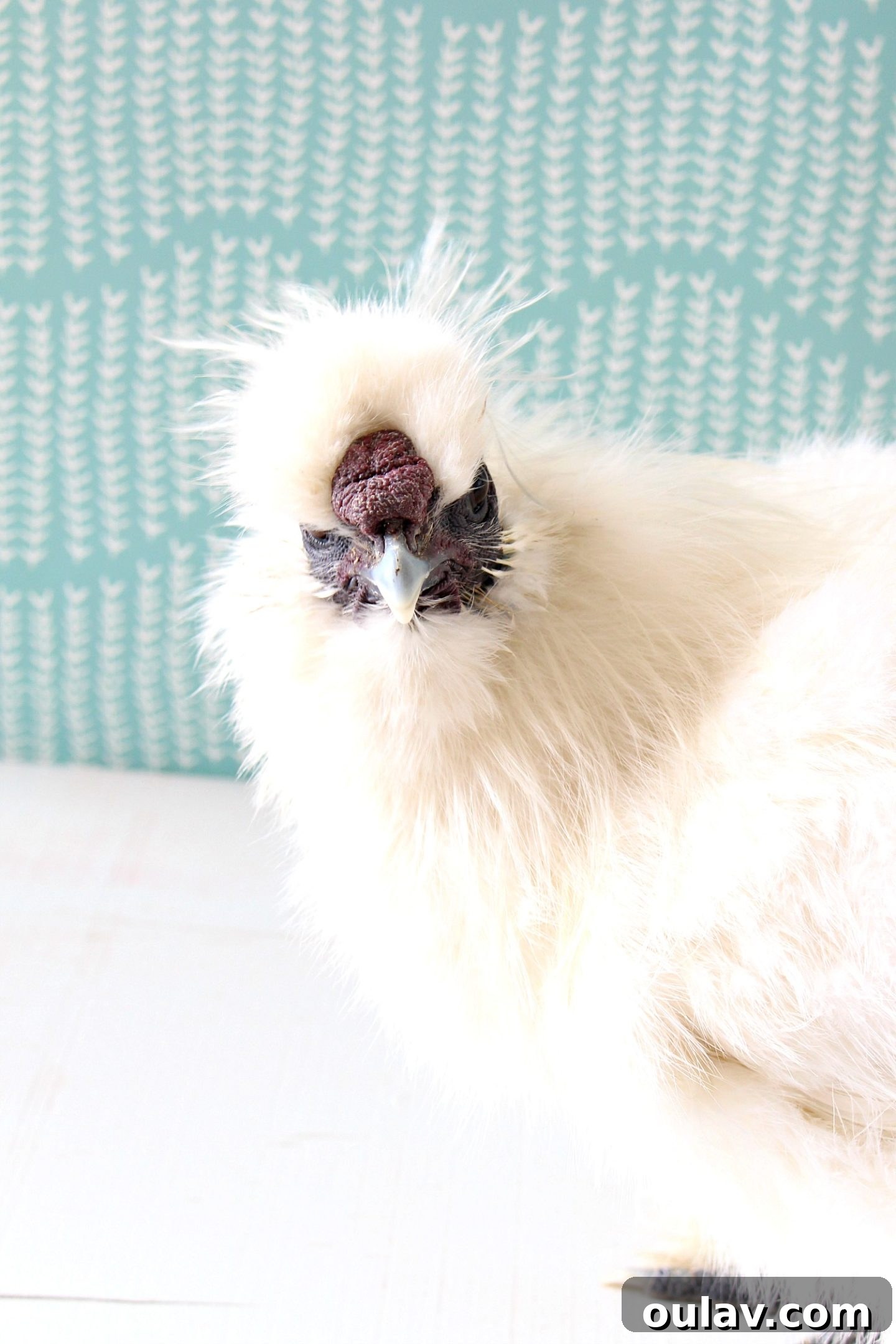
Due to their unique feather structure, Silkies cannot fly, which means they rarely roost high off the ground like other chicken breeds. This necessitates special consideration for their coop setup, such as providing ramps and low roosts. While Silkies are surprisingly cold-hardy for a non-flying breed – mine handled our brutal winters quite well – their feathers are not waterproof. This makes them particularly vulnerable to wet conditions, which can quickly lead to chilling and health problems. I recall a couple of exceptionally cold days when Coal would clamor onto my lap, yipping for warmth, signaling the need for even more insulated, low-level perches. Their inability to handle wetness also highlights why a good bath and thorough drying, especially after accidental soiling, are absolutely vital for this breed’s well-being.
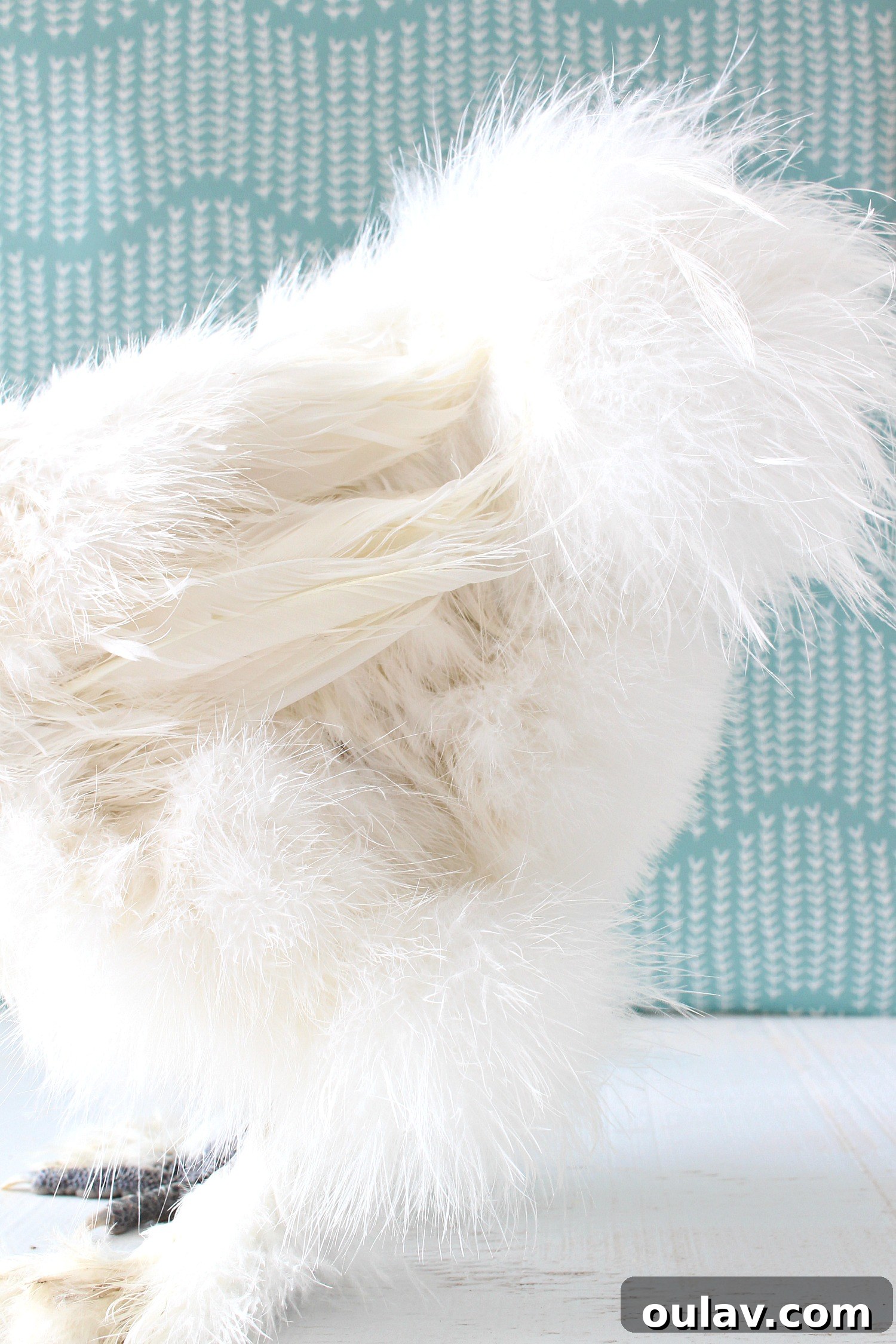
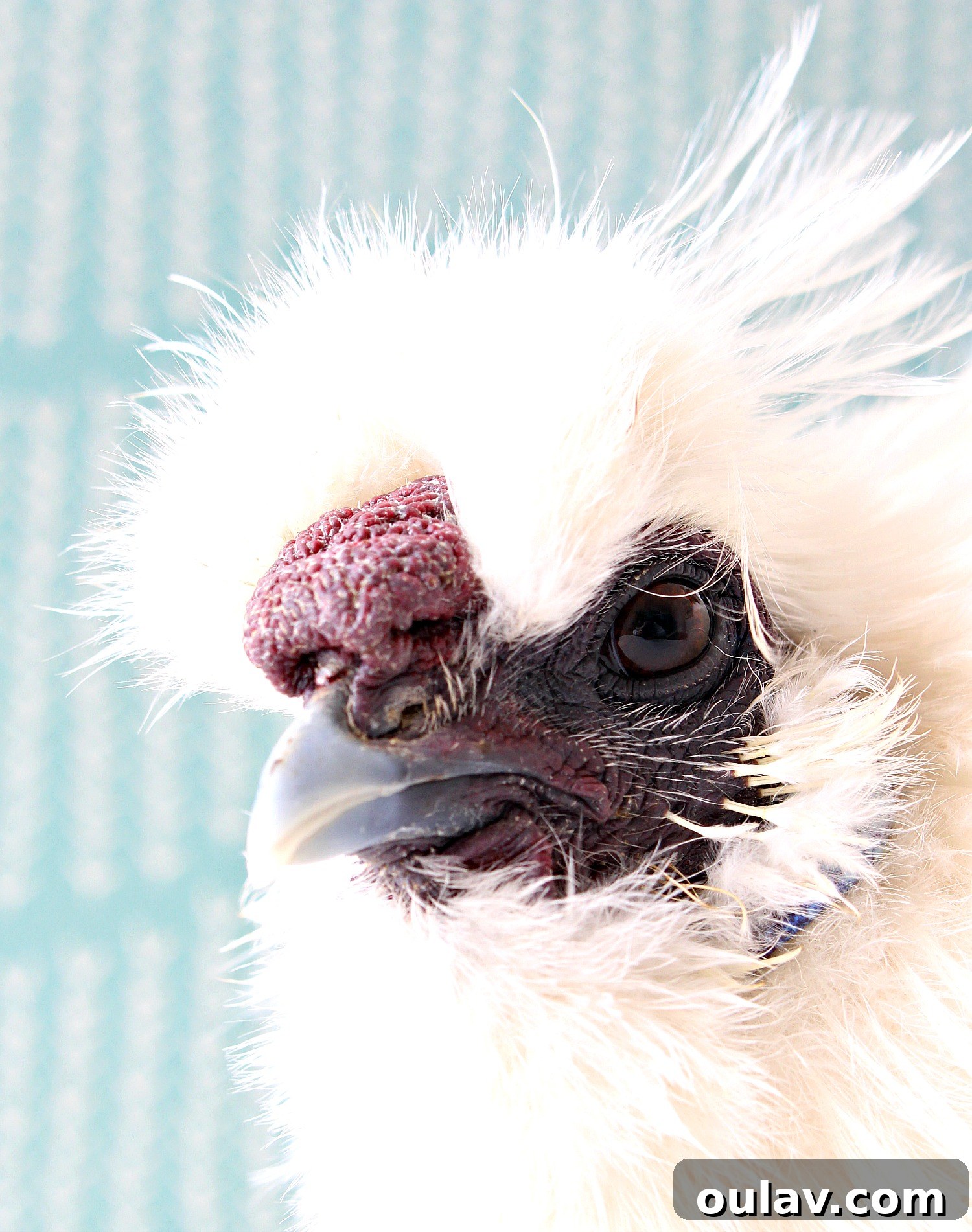
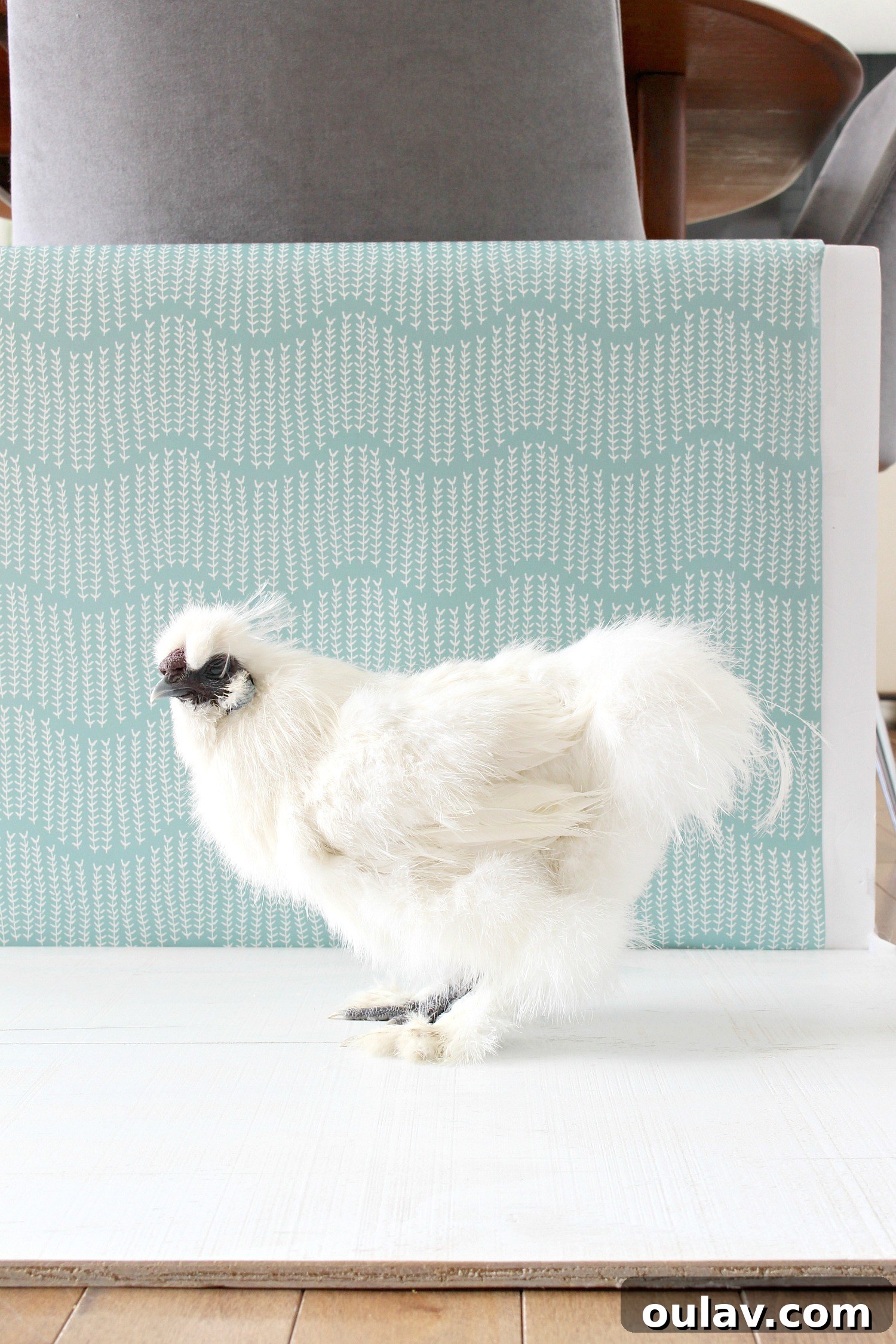
For a little behind-the-scenes perspective, these images show just how compact and adorable Pearl truly is.
I hope this comprehensive guide on how to bathe a chicken proves incredibly helpful for new and experienced backyard chicken keepers alike. If you don’t have chickens, I hope it provided at least some entertaining insights into the life of poultry parents! Remember, when it comes to bathing, be firm but gentle with your feathered friends, and plan for a thorough bathroom cleanup (and perhaps your own shower!) immediately afterward. Beyond intervention, maintaining a clean coop and regularly providing ample space for natural dust bathing are your best defenses against persistent soiling and the threat of Flystrike. Prioritizing consistent hygiene ensures your chickens remain as naturally clean, healthy, and happy as possible without needing a soapy intervention.