
Welcome back, fellow craft enthusiasts! After a brief hiatus from the world of DIY, I’m thrilled to share my renewed passion for embroidery. Looking back at my favorite projects from 2014, it’s clear that the hustle of moving, unpacking, and settling into a new home put my crafting endeavors on the back burner. Life’s demands often shift our focus, and by the time things began to mellow, my creative momentum had, admittedly, waned. But now, I’m back in the saddle, diving headfirst into a truly ambitious project: a densely embroidered bolster pillow. This intricate piece, featuring different shades of teal, green, and turquoise, is destined to add a touch of handmade elegance to our bedroom. It’s an undertaking far more intense and detailed than my previous turquoise embroidery project, promising a delightful challenge.
For those who recall, I had promised an embroidery tutorial after completing my first pillow. I sincerely apologize for the delay! Several of you patiently and repeatedly asked for it, and I felt a pang of guilt each time. The truth is, I barely consider myself proficient in embroidery, making me feel ill-equipped to offer any formal tutelage. My intention was always to practice more extensively first. However, for this second project, I’ve decided to embrace a different approach. Rather than waiting until I’m an expert – which, at this rate, might take a century! – I’ll be chronicling my progress in a series. This way, I can share what I learn (and what I already know) as I go, offering a real-time journey through the process. Before we delve into the nitty-gritty details of designing patterns, transferring designs, selecting materials, mastering various stitches, and ultimately, successfully completing this new embroidery project, I want to take a moment to share some fascinating insights into the history of Hungarian embroidery. Both my initial foray and my current ambitious undertaking are deeply inspired by and modern adaptations of this rich tradition.
A Deep Dive into Hungarian Embroidery: History, Culture, and Craft
The Enduring Legacy of Hungarian Textile Art
The intricate history of Hungarian embroidery, much like that of many other ancient cultures, spans millennia. Its roots stretch back thousands of years, with organized instruction in textile arts documented as early as the 11th century. During this period, Hungary already boasted schools dedicated to weaving and embroidery, showcasing the early recognition of these crafts as vital skills and art forms. Historically, the practice of weaving and embroidery was often gendered. Men predominantly dominated the professional aspects of the trade, creating elaborate textiles for religious institutions, nobility, and commercial purposes. Meanwhile, women played a crucial role in crafting impressive and often beautiful textiles for their homes, imbuing everyday items with artistry and personal touch. As economic landscapes shifted over time, women increasingly created embroideries for sale, turning their skill into a valuable means to supplement family income.
While the widespread practice of traditional Hungarian embroidery may be declining in contemporary society, the art form, with its distinctive motifs and vibrant expressions, remains an incredibly important facet of Hungarian culture. Today, visitors will find beautifully embroidered items gracing every tourist gift shop across the country, serving as tangible links to its rich heritage. It’s also common to find these cherished pieces adorning homes, passed down through generations or acquired as symbols of national pride. What truly sets Hungarian folk art apart is its remarkable regional diversity. Hungary proudly boasts more than twenty distinct folkloric regions, each a treasure trove of unique motifs, patterns, and color palettes that can vary widely from one area to another. This incredible variety is a testament to the country’s rich tapestry of local traditions and artistic expressions. For those curious to explore further, this comprehensive link showcases some of the more well-known and captivating Hungarian folk motifs, offering a visual journey through this vibrant art form.
A Tapestry of Regions: Diverse Motifs of Hungarian Folk Art
My own family lineage traces back to the Kalocsa region, a fact that has always given me a special connection to its distinctive embroidery style. With a bit of practice and familiarity, I can often identify Kalocsa designs with relative ease. Don’t be too impressed, though; Kalocsa embroidery is exceptionally popular and frequently mistaken as being representative of the entire country’s folk art, so the odds are certainly in my favor! Some enthusiasts even claim that Kalocsa boasts the richest folk art tradition in Hungary – a bold statement, but one rooted in its profound artistic heritage. While Kalocsa embroidery is renowned today for its incredibly bright, cheerful, and often riotous colors, I recently discovered a fascinating historical detail: traditional Kalocsa embroidery was originally entirely white. This stark contrast is beautifully exemplified by the exquisite white embroidery my grandmother’s cousin crafted for my husband and me as a cherished wedding gift. It’s a stunning piece that I had professionally framed, and it now hangs proudly in our hallway, a testament to enduring family craft and tradition.
The introduction of color-fast embroidery thread, around the mid-19th century, marked a significant turning point, rapidly ushering in an era where colorful embroidery soared in popularity across the region. Certain colors were, and still are, traditionally used in specific combinations, each often imbued with deep cultural meaning. For instance, as a woman aged, the color palette of her embroidered attire would gradually become more subdued, with particular hues – such as purple – representing mourning. This intricate use of color wasn’t merely aesthetic; it was a profound visual language, with folk clothing serving as a rich canvas for conveying personal status, life stages, and emotions.
Decoding the Threads: Symbolism in Hungarian Embroidery
While the motifs of different Hungarian regions are wonderfully varied, a discerning eye can begin to recognize their distinct characteristics by comparing various folk art pieces from within Hungary. In Kalocsa designs, for example, one will frequently encounter a charming array of stylized flowers, delicate berries, robust wheat sheaves, and the iconic paprika themes. These motifs are not merely decorative; they are deeply ingrained in the local culture and have been utilized for centuries. Beyond textiles, these recognizable patterns adorn the well-known Kalocsa Porcelain, transforming everyday ceramics into works of art. Long before wall stenciling became a Pinterest-worthy trend, Hungarian women in Kalocsa expertly painted these intricate designs directly onto their walls, transforming their homes into vibrant expressions of folk art. For captivating examples of this traditional wall painting, one can explore historical archives that showcase this beautiful practice.
Confession time: don’t tell my family, but I also harbor a soft spot for Matyo embroidery. This distinctive style typically boasts even more densely embroidered designs, often set against a dramatic black background. I am particularly captivated by the unique shape of the Matyo flowers and the exceptionally luxurious appearance these richly embroidered textiles exude. Their opulent texture and bold designs offer a striking contrast to the cheerful exuberance of Kalocsa, showcasing yet another facet of Hungary’s diverse embroidery traditions.
From Dowries to Design Week: Hungarian Embroidery in Modern Life
Celebrating Tradition: The Role of Embroidery in Hungarian Life
Across the length and breadth of Hungary, you’ll find exquisite examples of Hungarian embroidery adorning a vast array of items. From traditional clothing and elaborate tablecloths to decorative pillows and fine bed linens, the intricate stitches tell stories of heritage and craftsmanship. Historically, many of these beautifully embroidered items were meticulously prepared as part of a young girl’s dowry. A dowry could consist of hundreds of such items, each a testament to her skill and diligence, and a profound source of pride for both the bride and her family. These precious textiles, along with the marital bed and other essential furniture, would even be paraded through the town for the post-wedding “bed dance.” During this festive event, wedding guests would critically, yet admiringly, judge the quality and quantity of the goods, a tradition highlighting the immense cultural value placed on these handmade treasures. The nuptial bed itself was no small affair, traditionally consisting of two or three elaborate coverlets and an impressive nine pillows. It’s this rich history that I often use to playfully justify my own “throw pillow obsession” to my husband – I’m merely keeping a tradition alive, though I must admit, I’m still one pillow short of the traditional nine!
Bridging the Past and Present: Contemporary Interpretations
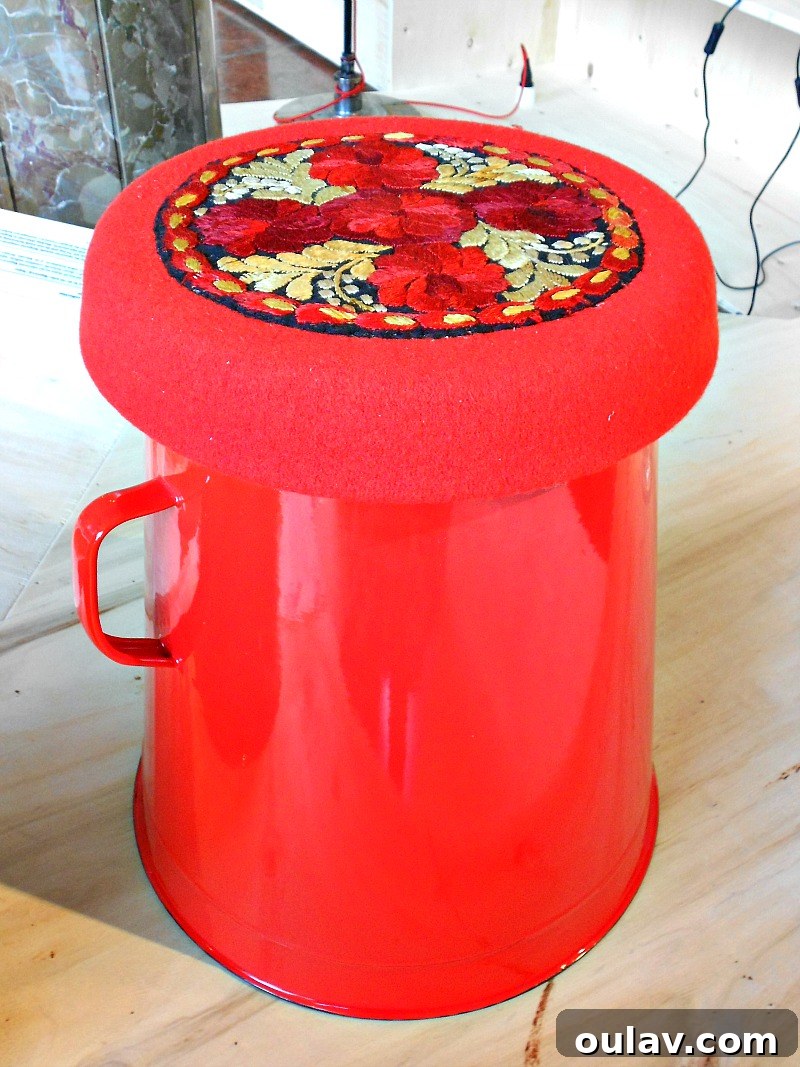
While it’s rare to see Hungarians don full, traditional embroidered folk costumes in everyday life today – though you might still catch a glimpse in some smaller, more remote villages (I certainly have!) and, of course, prominently during national cultural celebrations – the timeless designs and motifs remain profoundly relevant. My experience during Budapest Design Week vividly illustrated this enduring appeal. I noticed a wonderful trend among many contemporary artisans and designers who are skillfully re-interpreting these classic folk designs, infusing them with a distinctly modern spin. This innovative approach allows the rich heritage of Hungarian embroidery to transcend its traditional context and find new life in contemporary aesthetics, from fashion to home decor, ensuring its beauty continues to inspire and evolve.
| My Own Photo |
My Ongoing Embroidery Odyssey: Learning, Creating, Remembering
My Personal Connection to the Craft
I’ve always harbored a deep fascination for Hungarian history, particularly its vibrant folk art. What I knew previously were merely captivating tidbits gleaned around my grandmother’s kitchen table. My understanding expanded significantly when I had the incredible opportunity to live in Budapest for a semester, immersing myself in the culture and history firsthand. Now, as I search for the perfect design for my newest embroidery project – with photos coming soon, I promise! – I’ve unearthed even more history and an abundance of inspiration. This renewed journey of discovery is something I felt compelled to share, even though I still feel I know so little. To deepen my knowledge and guide my craft, I’ve (ahem) *borrowed* my Mom’s cherished book, “Treasures of Kalocsa,” which I’ve been poring over with fervent dedication. Upcoming posts in this series will delve into the intricate art of pattern making, practical techniques for transferring designs onto fabric, and detailed instructions on mastering various embroidery stitches. I am incredibly excited to embark on this learning and creating adventure with all of you.
A Stitch in Time: Honoring a Legacy
My excitement for this renewed interest in embroidery, however, is tinged with a slightly heavy heart. I don’t want to be a “Gloomy Gus,” but my grandmother’s cousin – the very woman who created that exquisite white embroidery piece I showcased earlier – passed away recently. It was my distinct pleasure to visit her each of the three times I traveled to Hungary. I believe she was pleased to see me learning to embroider during my last visit to Hungary, though she was always a tough person to read. After returning to Canada and completing my first project, I kept meaning to print some photos of the finished piece and mail them to her, but I never did. There’s truly no excuse for my procrastination. She was incredibly dear to my grandmother, and, of course, to her own children, grandchildren, and great-grandchildren. My heart goes out to them; she was a dynamic, strong, and deeply thoughtful woman, and I am certain she is missed profoundly. Even though I barely knew her on a personal level, the news of her passing causes my chest to tighten, and waves of guilt wash over me. My thoughts have turned to her many times since, especially now as I pick up my needle once more. I am eternally thankful that I had the chance to tell her in person how much I treasured her gift and how deeply she inspired me. I’m grateful I even had the opportunity to meet her at all. She was such an interesting woman, and she was always so kind to me. I don’t typically carry many regrets in life, but I genuinely regret not taking those two minutes to send her a little note and some photos. It’s a poignant reminder to cherish and acknowledge those who inspire us, for time is a precious and fleeting gift.
Further Reading and Resources
Explore the Richness of Hungarian Embroidery
For those eager to delve deeper into the captivating world of Hungarian embroidery and folk art, the following resources offer invaluable insights and inspiration:
Sources:
Hungarian Folklore Museum – Hungarian Embroidery
Kalocsa Embroidery
Folk Costume and Embroidery
Hungarian Folk Motifs
Folk Fashion – Kalocsa
Kalocsa Official Website
Folk Art Hungary
Smithsonian Folk Life Festival – Hungarian Heritage