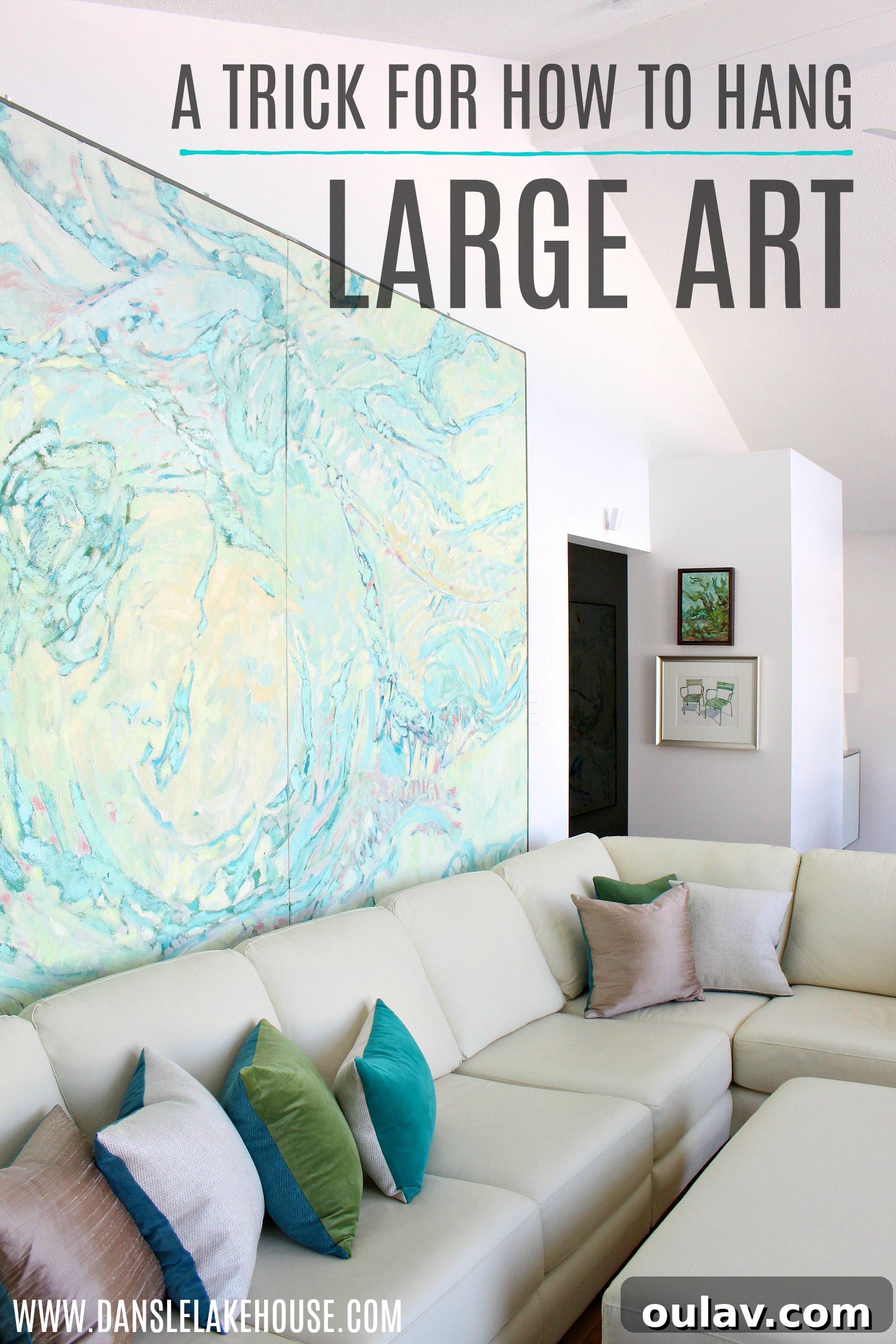
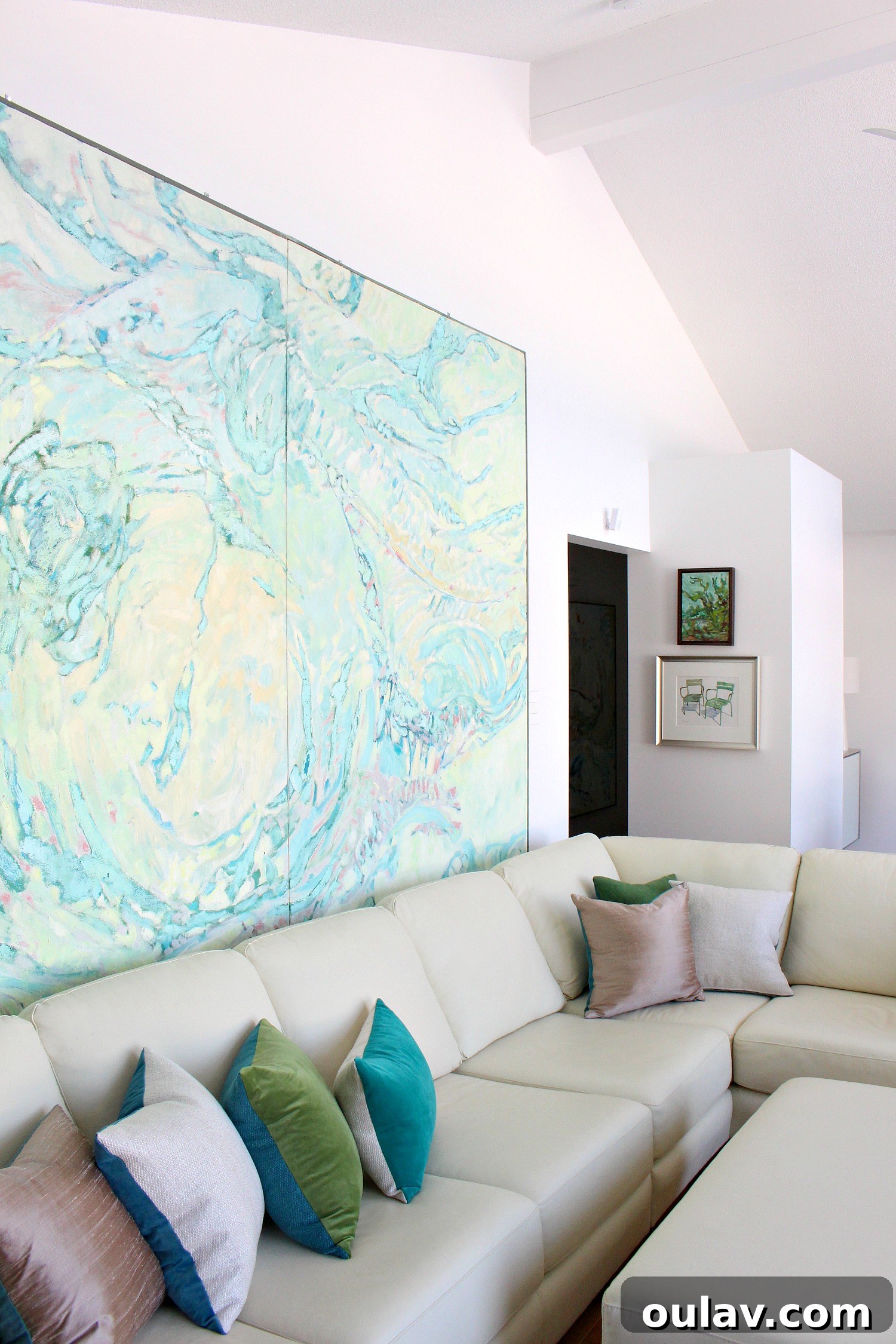
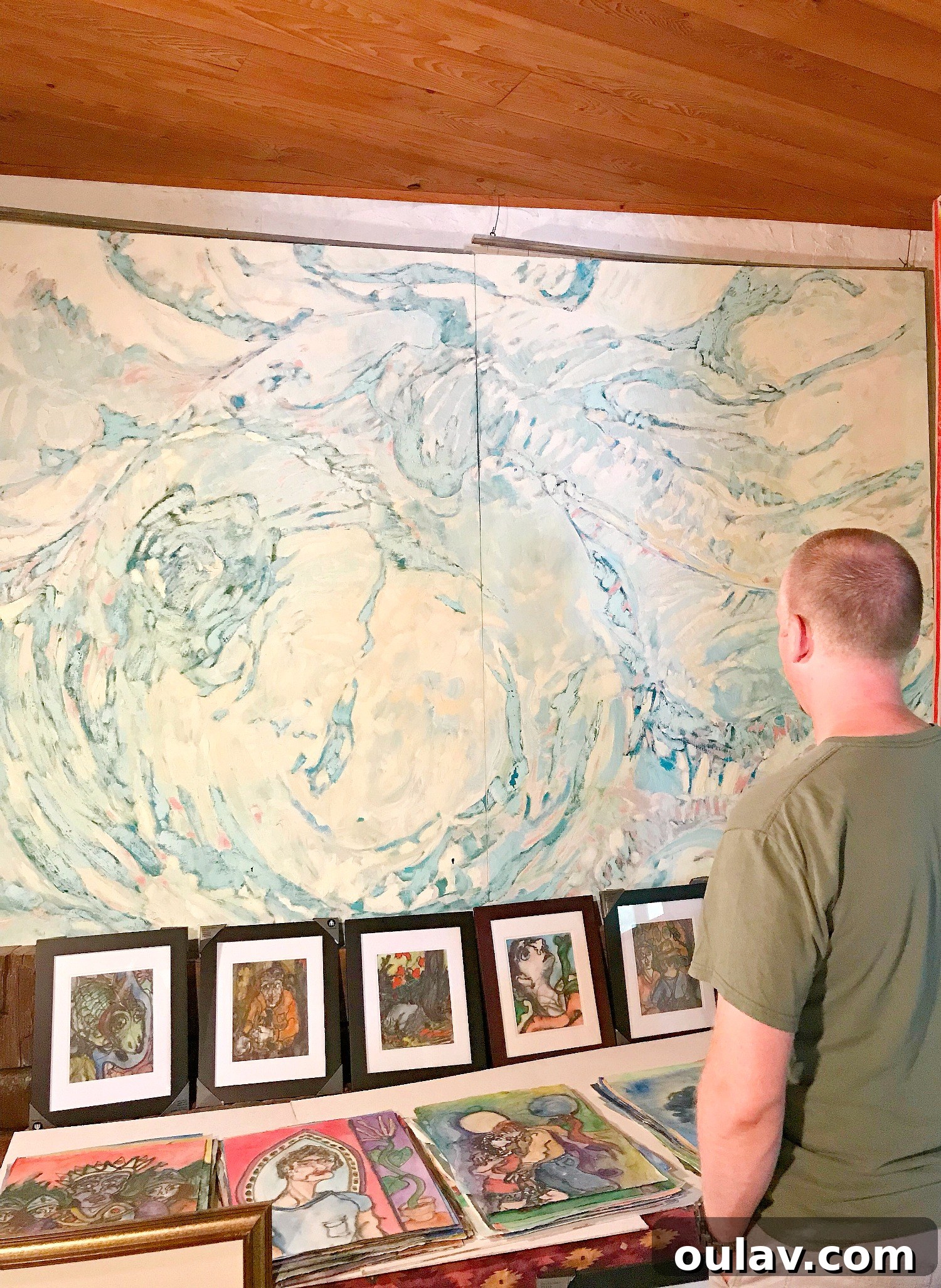
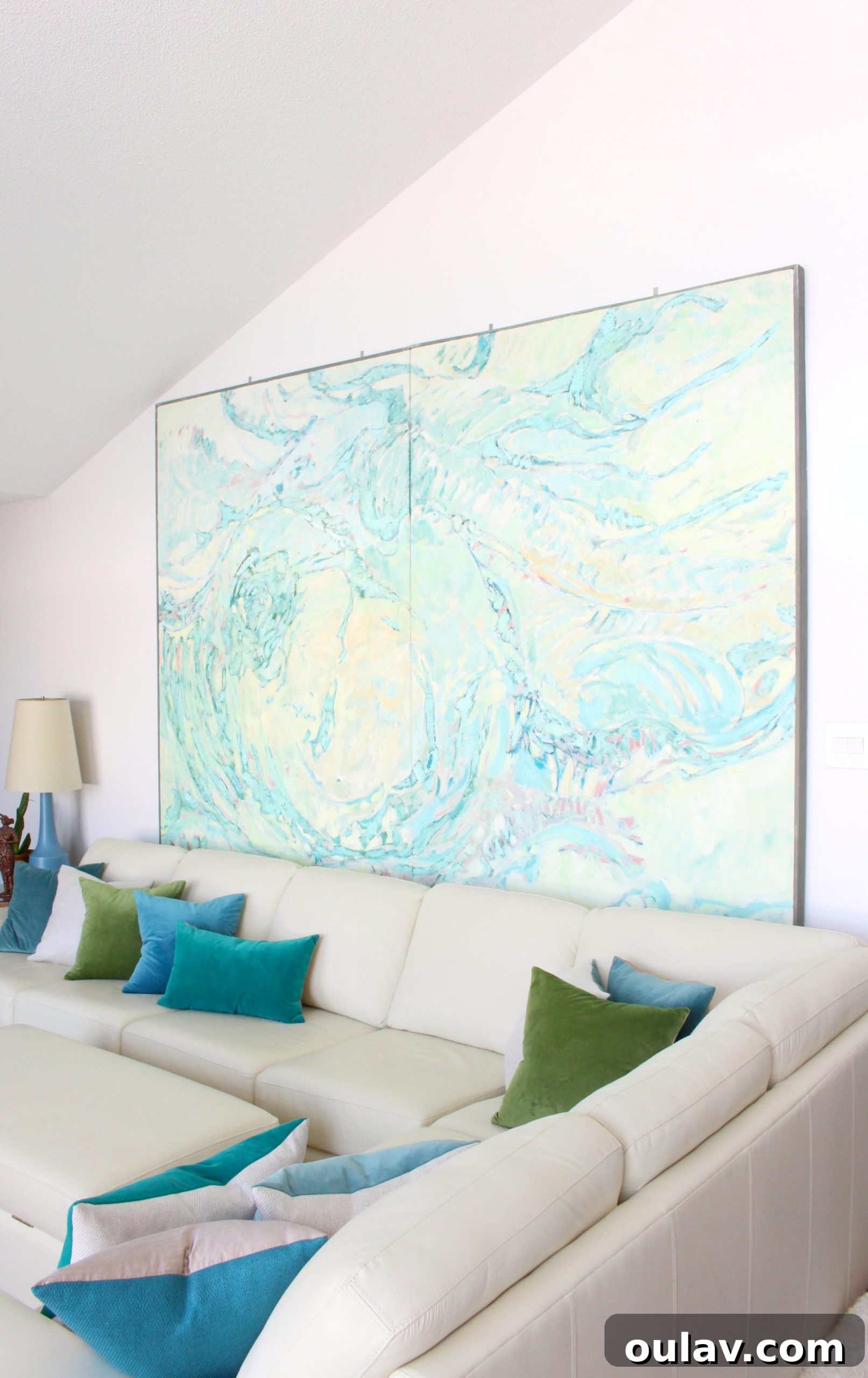
Welcome to our humble abode, where one particular piece commands immediate attention: the magnificent, large-scale painting adorning our living room wall. This impressive artwork, a cherished creation by Hubby’s talented grandpa, Bert, invariably sparks conversation and curiosity. Over time, I’ve received numerous inquiries, not only about the practicalities of hanging such a substantial piece of art but also about the clever trick we use to position a sofa directly in front of it without risking any damage to the artwork. Today, I am thrilled to unveil our two ingenious hacks that effectively tackle both of these common home decor dilemmas, transforming intimidating tasks into manageable DIY projects.
Large art pieces, like Bert’s painting, serve as powerful focal points, injecting personality, color, and a sense of grandeur into any space. However, their size can make installation seem daunting, and ensuring their safety, especially in high-traffic areas or when furniture is involved, requires thoughtful planning. We’ve learned these lessons firsthand, and we’re excited to share our straightforward, effective methods to help you confidently integrate monumental art into your own home, preserving both its beauty and your peace of mind.
Mastering the Art of Display: Hanging Large Art and Protecting It from Furniture
Expert Tips for Securely Hanging Large-Scale Artwork
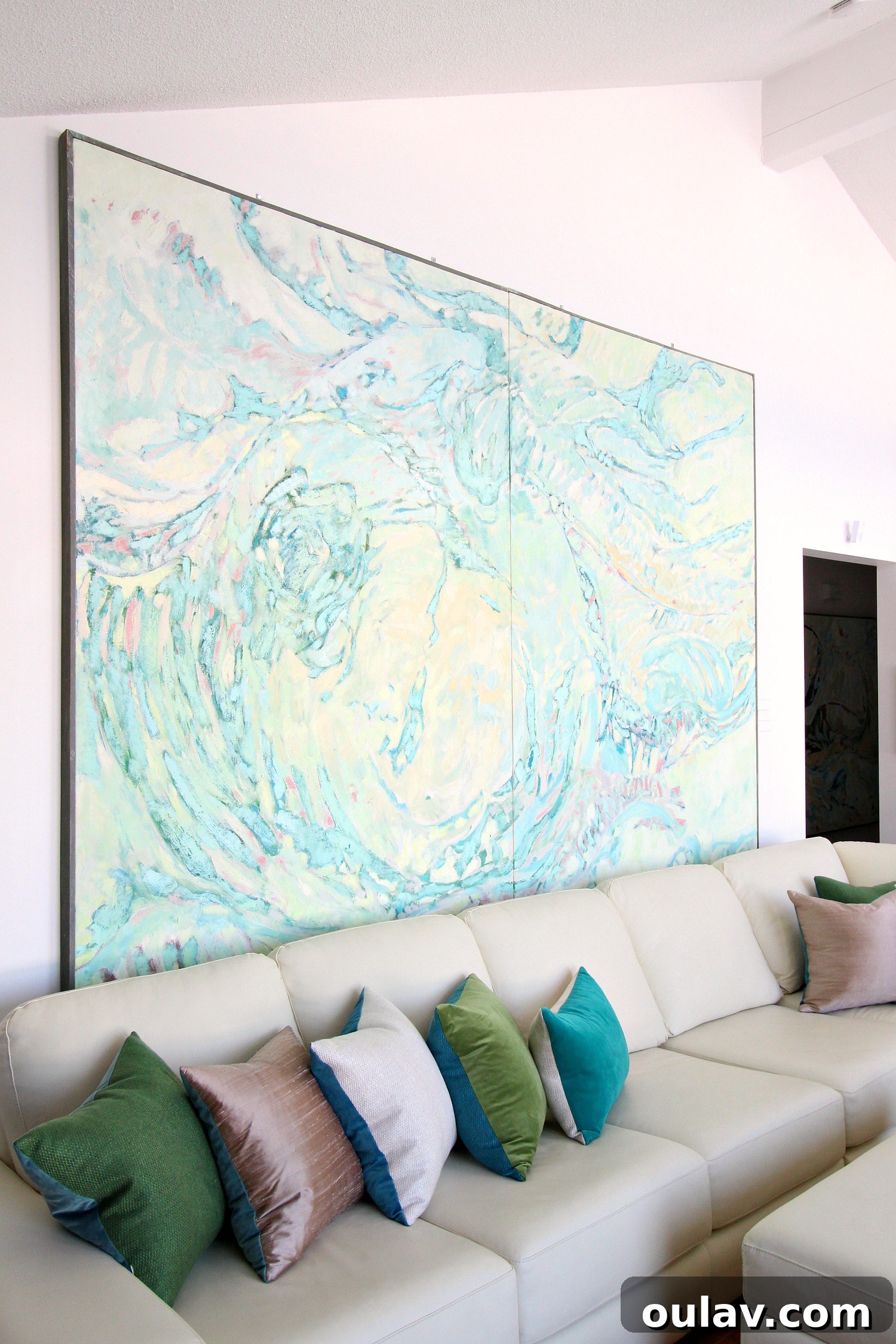
Let’s dive right into the first challenge: how to securely hang truly colossal artwork. The painting in question, a diptych that spans an impressive 112 inches by 91 inches, is undeniably monumental. Its sheer size initially presented a significant logistical puzzle. Fortunately, we stumbled upon an incredibly effective and surprisingly simple trick that has made all the difference.
Our journey to this solution began last fall, following the passing of Hubby’s beloved grandpa, Bert. Bert, a renowned artist, had thoughtfully left Hubby a choice of five of his paintings in his will. This led us on a poignant and inspiring trip to Bert’s studio, where we selected this magnificent piece. On our return journey home, we made a meaningful detour to the library of Laurentian University, where a substantial collection of Bert’s art is proudly displayed. We were eager to see his works in such a prestigious setting.
What I hadn’t fully grasped was the sheer number of his paintings gracing those walls, many mingling harmoniously with masterpieces by the iconic Group of Seven artists! It was an awe-inspiring experience. Amidst this incredible display, one particular painting captivated me so completely that, for a fleeting moment, I was tempted to concoct a plan to ‘liberate’ it from the wall and smuggle it home. (We did have a trailer, so the thought, however mischievous, was undeniably tempting, haha!)
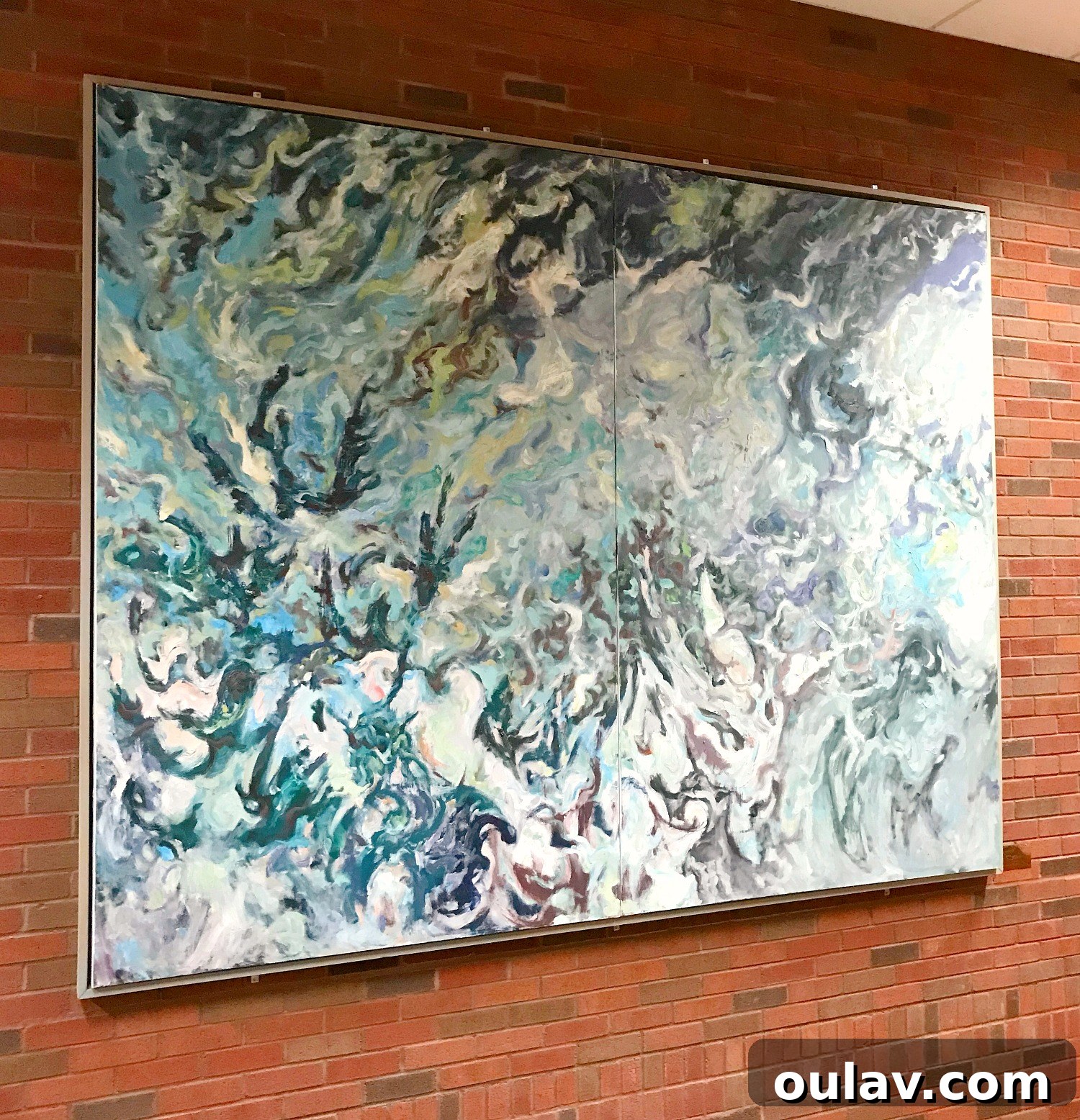
While I was immersed in admiration for this particular piece, we began to meticulously examine its installation. That’s when the “lightbulb moment” occurred. We realized the seemingly complex task of hanging such massive canvases was managed by a remarkably clever and straightforward system: heavy-duty corner brace hardware. These robust L-shaped brackets, available in various sizes, were subtly visible at the top and bottom of the paintings. For smaller artworks, we typically rely on D-rings and picture hanging wire, or for slightly larger pieces, a pair of heavy-duty D-rings. However, for a diptych of this magnitude, something more substantial and secure was clearly required, and these corner braces proved to be the ideal, industrial-strength solution.
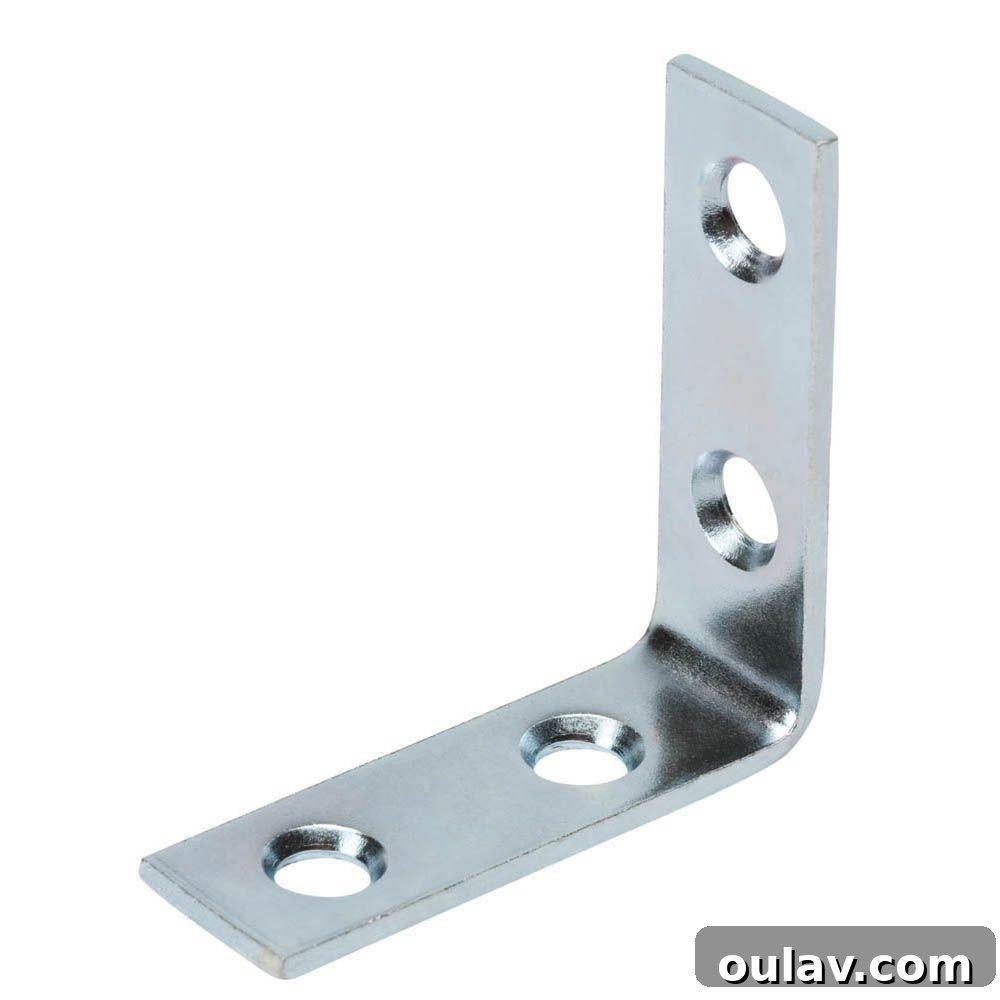
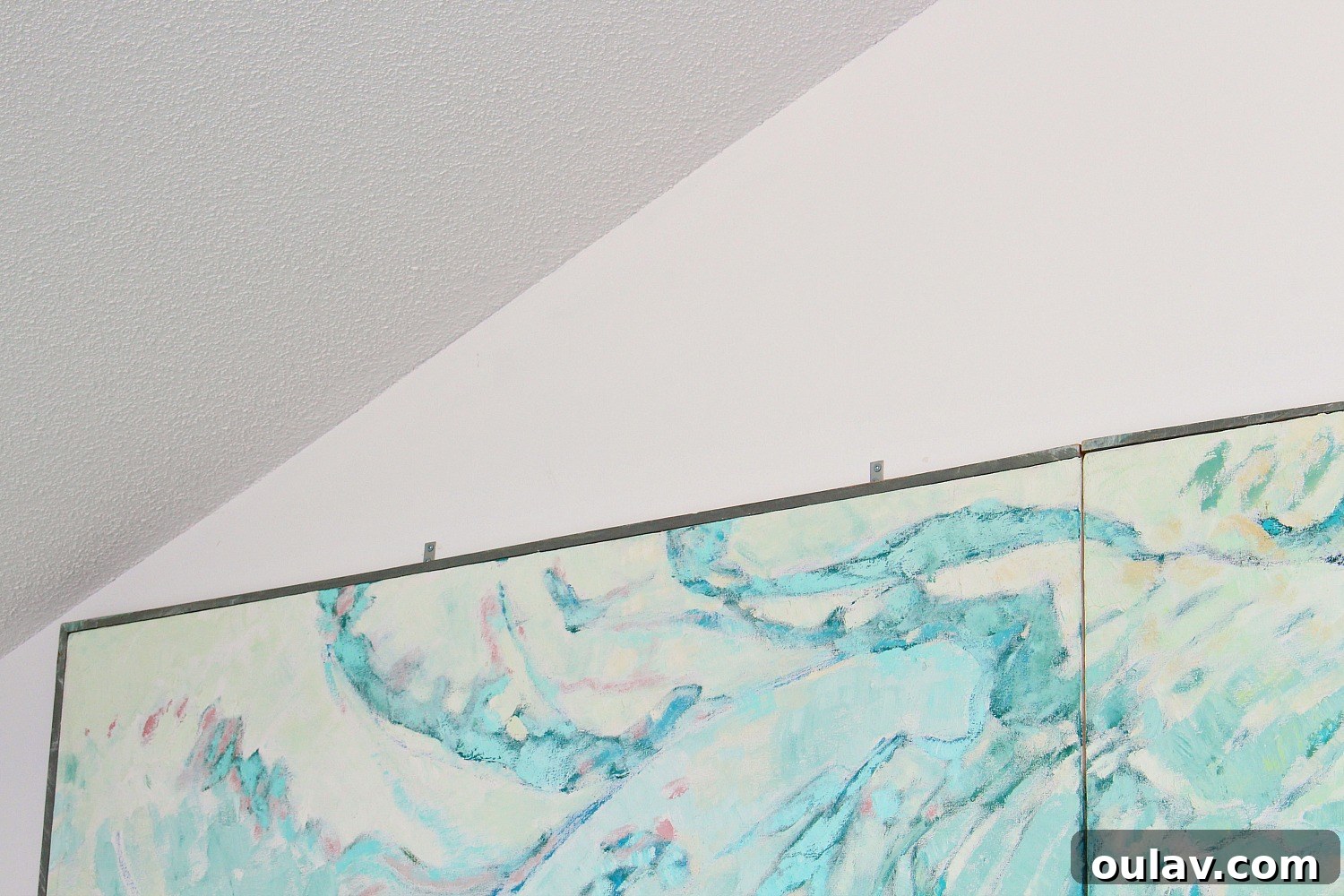
Here’s precisely how this method works: The corner braces are first screwed directly into the wall, crucially into studs for maximum stability and weight support. Then, one arm of the brace extends horizontally and is screwed into the top of the canvas frame, penetrating through to the sturdy wooden stretcher bars beneath the canvas. For the bottom section of the painting, we repeat a similar process, but with a slight modification. The bottom corner braces are screwed into the wall, and then the painting is gently rested on top of these horizontally extending arms, effectively creating a small, robust shelf. Once the painting is perfectly positioned, the braces are then screwed into the canvas frame and stretcher from underneath, locking the artwork firmly in place.
While we couldn’t capture progress photos – maneuvering such a massive painting truly required both of our full attention and hands – the concept is quite intuitive. For our diptych, we utilized two braces per panel at the top and two per panel at the bottom, totaling eight braces. Every single brace was meticulously anchored into a wall stud, guaranteeing unparalleled strength and security. This system has held our substantial painting perfectly, without the slightest hint of movement or instability. The key, as mentioned, is to ensure the screws firmly engage with the wooden stretcher bars of the canvas, not just the decorative outer frame, for optimal support. These versatile corner braces come in various sizes to accommodate different canvas depths and weights, making them a go-to solution for any large art installation.
Ingenious Solution: Placing a Sofa in Front of Art Without Damage
Our next decor challenge arose after successfully hanging Bert’s monumental artwork. This involved the strategic placement of furniture, specifically our living room sofa, in relation to the painting. When we initially went to select Hubby’s paintings from Bert’s studio, we were meticulously prepared, armed with measurements for practically every potential wall space in our home. We had originally envisioned one of Bert’s spectacular “Wave Series” diptychs above our living room sofa. However, our plans hit a snag when we realized the ceiling height on the left side wasn’t quite sufficient for that particular piece to clear the top of the sofa. It was a classic “measure twice, cut once” lesson learned the hard way with art placement!
Reluctantly, we decided to hang it in the hallway instead. But upon returning home and attempting to position it, another logistical hurdle emerged: while it would technically fit, there was simply no practical way to stand it up for installation in that narrow space. Oops! However, fate had a playful twist. We recalled that this very painting had previously resided in Bert’s own studio, where he often placed a daybed directly in front of it. This observation sparked a brilliant idea: why not embrace this original intention and position our sofa a little behind the artwork, creating a deliberate and harmonious arrangement?
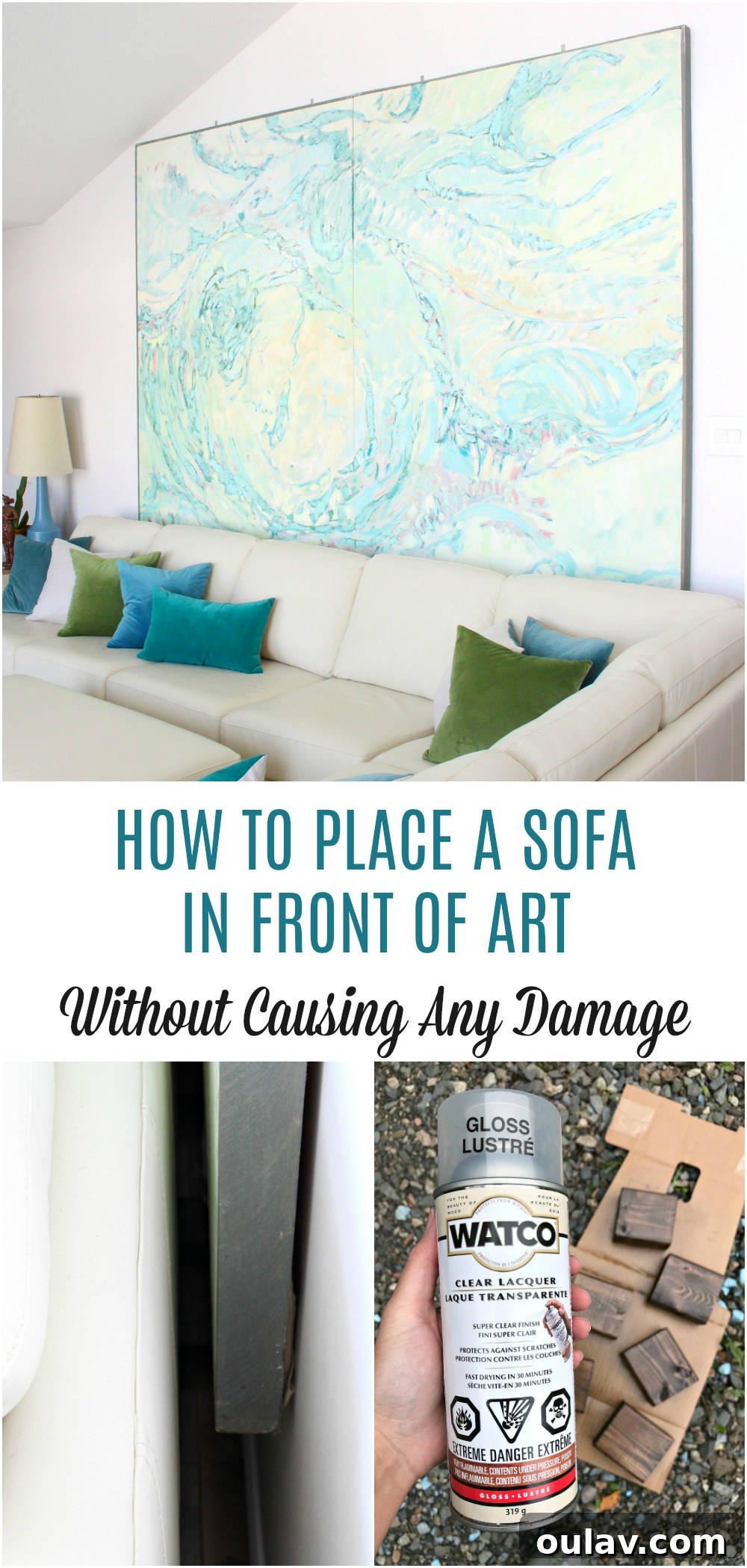
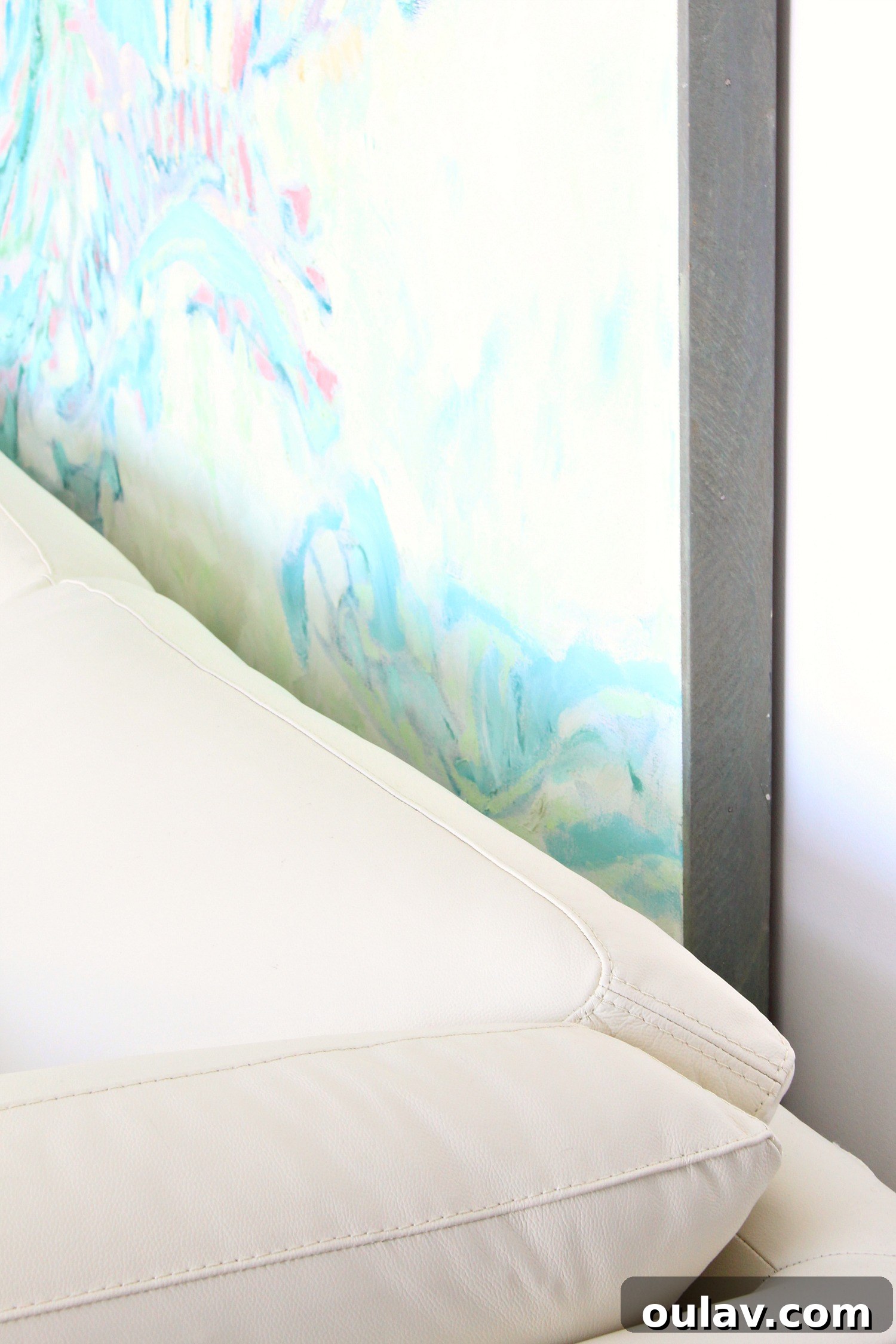
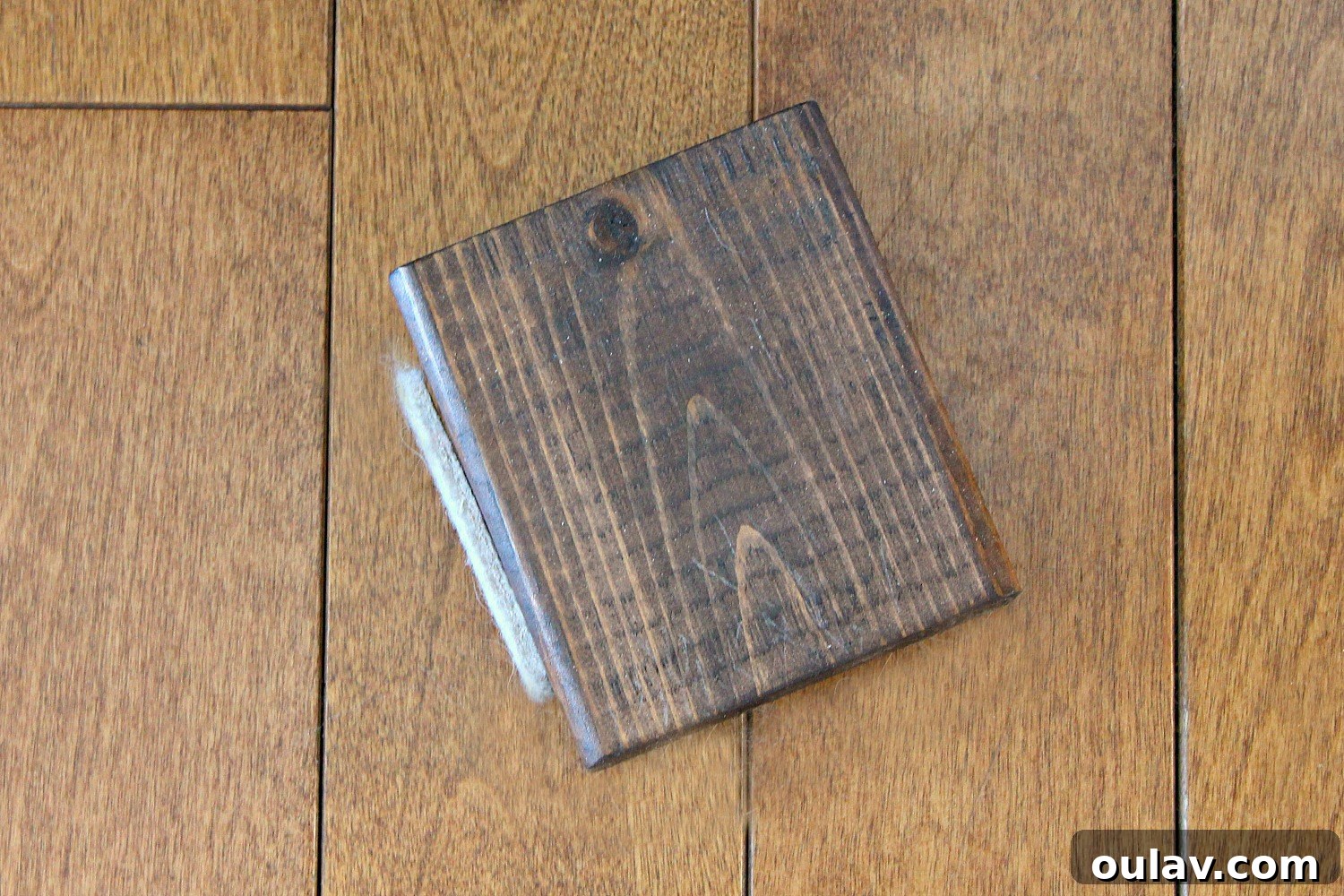
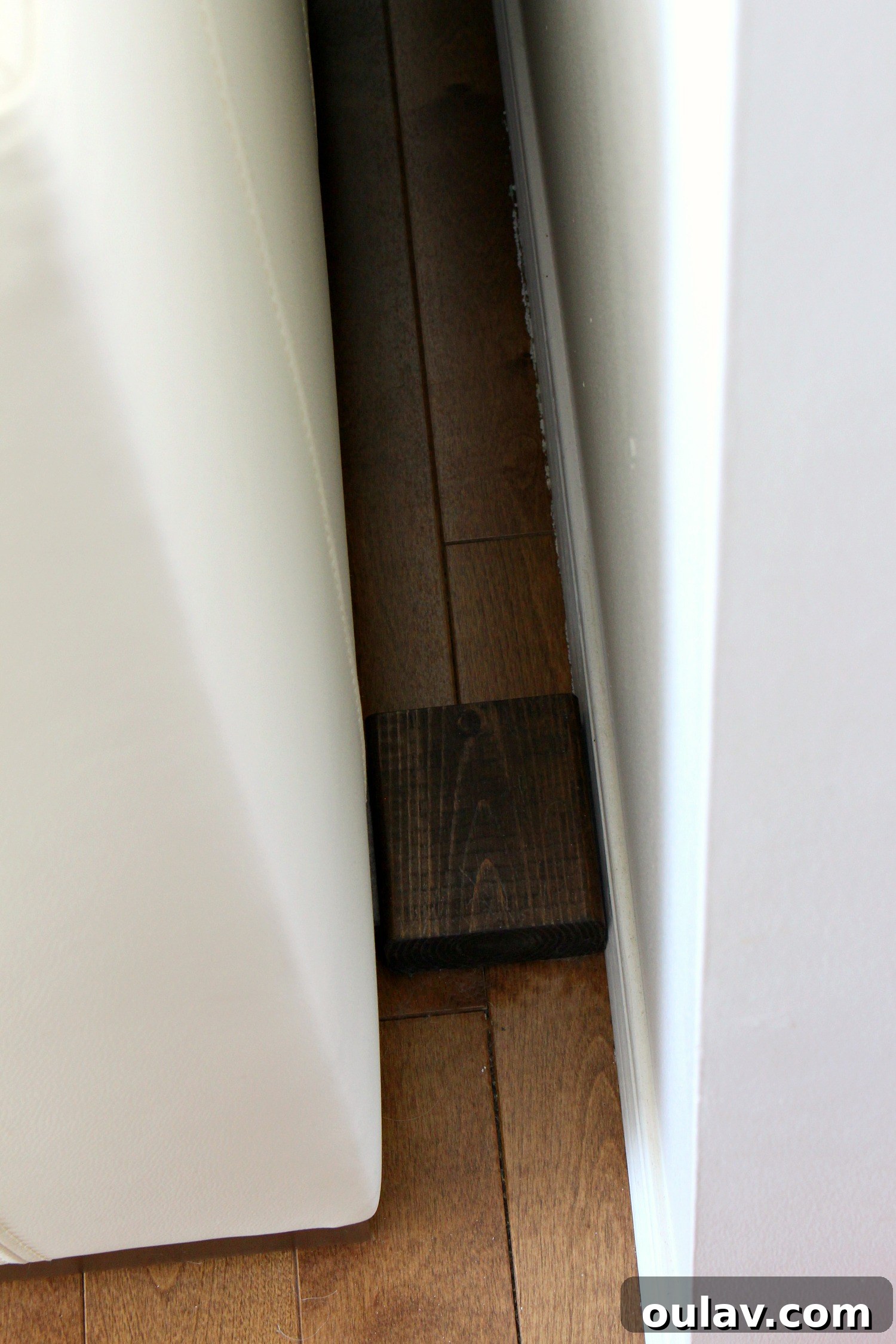
While the aesthetic appeal of having the sofa in front of the art was undeniable, a new concern immediately surfaced: how to prevent the sofa from sliding back and repeatedly banging into the precious artwork. Accidental bumps could lead to irreparable damage to the canvas, a risk we were absolutely unwilling to take. Our solution? A set of discreet, custom-made wooden spacers. You might not even notice them in most photographs, but there’s a small, intentional gap between the back of the sofa and the wall-mounted artwork, meticulously maintained by these clever little blocks.
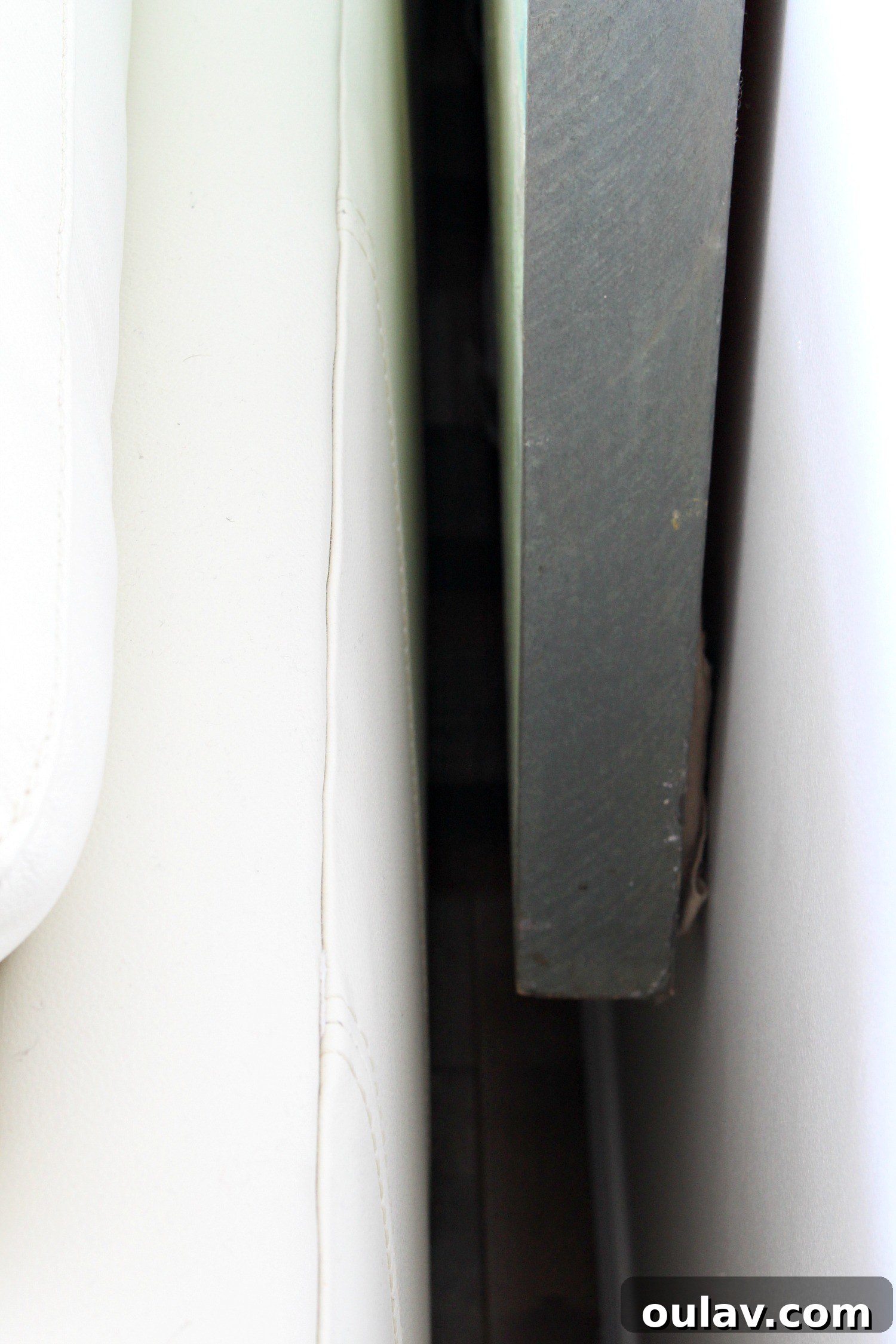
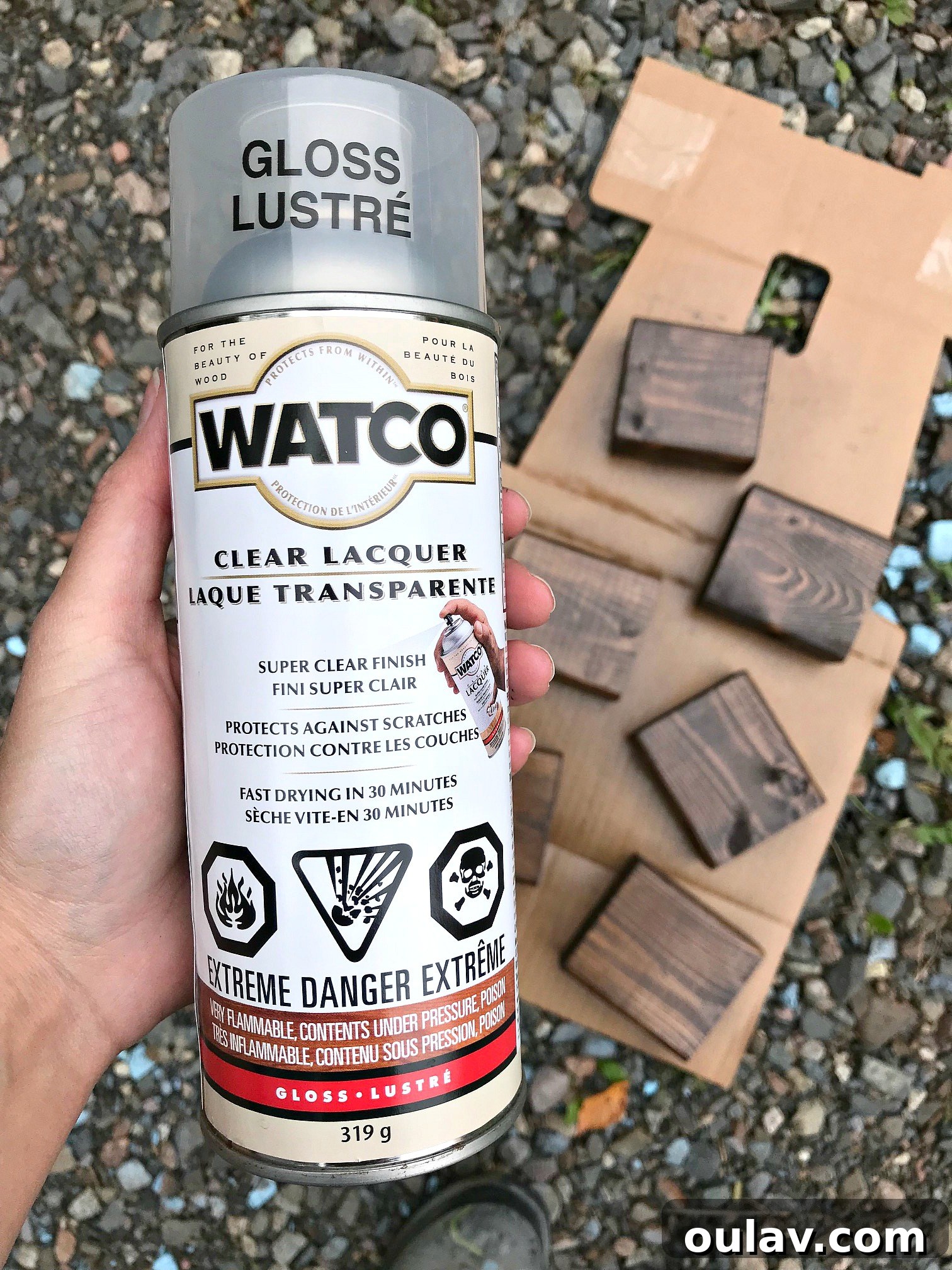
The creation of these spacers was a straightforward DIY project using readily available materials. We simply cut leftover 2×4 lumber, salvaged from a previous home improvement endeavor, into convenient 4-inch long blocks. To ensure they blended seamlessly with our decor, we carefully sanded them smooth and applied a stain that, while not a perfect match to our flooring, was close enough. The beauty of their placement is that they largely disappear into the shadows behind the sofa anyway, making an exact color match less critical. To further protect both the floor and the sofa, and to allow for easy, gentle movement when needed, I gave each block a few thin coats of spray lacquer and then adhered felt feet to their bottoms and sides. This thoughtful detail prevents any scratching or scuffing on both the hard flooring and the sofa legs.
These unassuming blocks simply slide into place between the sofa legs and the wall, acting as an invisible barrier. They effectively prevent the sofa from inching backward and colliding with the painting. While I could have invested more time in achieving an exact color match for the stain, their discrete placement means they blend in quite seamlessly with the shadows and the overall decor. And yes, please do excuse the inevitable dog hair that always seems to find its way into every nook and cranny – a true testament to living with furry companions! Despite minor imperfections, the functionality and effectiveness of these spacers are undeniable, providing essential protection for our cherished artwork.
And voilà! There you have it – our tried-and-true tips for not only successfully hanging even the most colossal pieces of art but also for thoughtfully arranging your furniture, like a sofa, in front of them without any risk of causing damage. These simple yet effective hacks ensure that your treasured artworks can be enjoyed safely and prominently within your home decor.
Embracing Artistic Legacy: Bert’s Inspiration and Home Decor
We feel incredibly fortunate and privileged to have Bert’s magnificent artwork gracing the walls throughout our home. Each piece is more than just a painting; it’s a tangible connection to his talent, his passion, and his vibrant spirit. Bert was an exceptionally gifted artist, and it’s a joy to know that one of his favorite colors was teal – a shade that resonates deeply with my own aesthetic sensibilities! You can imagine that we got along famously, sharing a mutual appreciation for bold, beautiful hues.
His artwork serves as a constant source of inspiration and a cornerstone for our interior design choices. I consciously decorate around his pieces, ensuring they remain front and center, celebrated as the true focal points they are. Even though he has passed on, Bert continues to inspire us every single day to fearlessly embrace color and to deeply appreciate the natural world around us. This particular “Wave Series” was inspired by his adventurous sailing expeditions, creating an even more special connection for us because we are sailors too. His art beautifully captures the essence of the open water, a sentiment we understand and cherish.
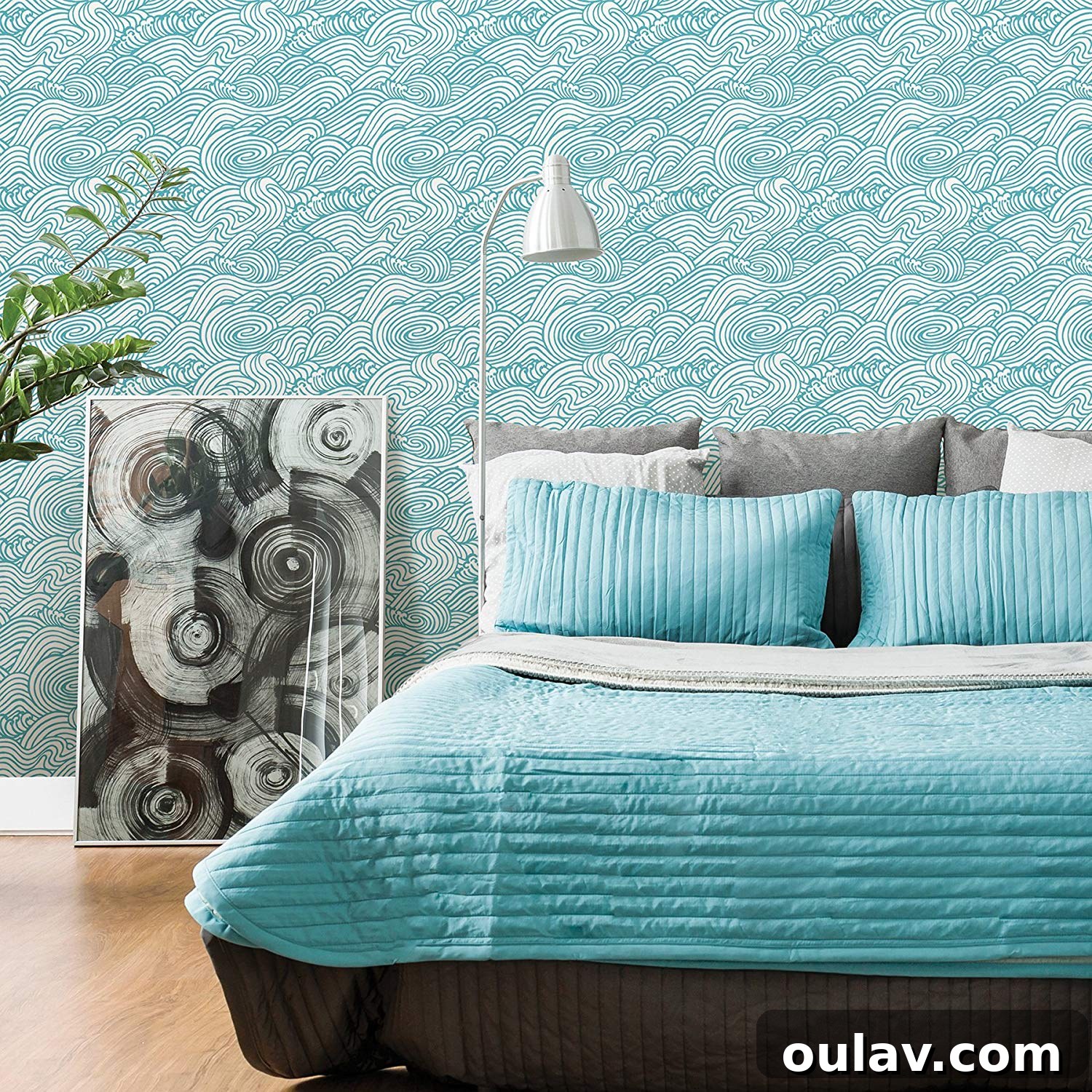
For those who have expressed admiration for the dramatic impact of this painting and inquired about ways to recreate a similar aesthetic, consider incorporating this stunning wave-inspired wallpaper. It could certainly evoke the same captivating, dynamic vibe and bring a touch of the ocean’s grandeur into your own living space, paying homage to Bert’s enduring legacy and his love for the sea.